
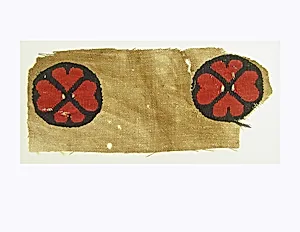
Textile Fragment
Unknown Artist
4th–6th century
Medium
Linen, wool; plain weave, tapestry weave
Dimensions
L. 4 in. (10.2 cm) W. 9 1/2 in. (24.1 cm)
Classification
Textiles
Department
Islamic Art
Museum
Metropolitan Museum of Art, New York, NY
Credit
Gift of David del Gaizo, 2008
Accession Number
2008.322.1
Rights
Public Domain
Art Historical Context
This delicate textile fragment, dating to the 4th–6th centuries, offers a glimpse into the sophisticated weaving traditions of Late Antiquity. Crafted from linen and wool using plain weave for the foundation and tapestry weave for decorative elements, it measures just4 inches long by 9½ inches wide. Housed in the Metropolitan Museum of Art's Department of Islamic Art, this small survivor—generously gifted by David del Gaizo 2008—hints at garments, furnishings, or ritual objects from a vibrant era of cultural exchange in the Near EastThe combination of techniques showcases early mastery: plain weave provided a sturdy, everyday base, while tapestry weave allowed artisans to create intricate patterns by interweaving colored yarns, much like painting with thread. Such methods were labor-intensive, often produced in workshops from Egypt to Persia, and prized for their durability and beauty in a pre-industrial world. In the context of Islamic art, this fragment bridges Late Antique traditions with the emerging Islamic world, where textiles held profound cultural value in daily life, trade, and burials. Though incomplete, it evokes the artistry of anonymous makers whose work influenced centuries of ornamental design.