
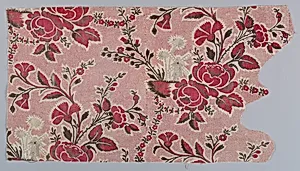
Textile
ca. 1760
Classification
printed, dyed & painted textiles
Department
Smithsonian Collection
Museum
Smithsonian American Art Museum
Credit
Gift of Harold M. Bailey
Accession Number
1960-79-1-a
Rights
Public Domain
About this artwork
Research in Progress
Art Historical Context
This exquisite *Textile* from circa 1760, housed in the Smithsonian American Art's Smithsonian Collection, offers a glimpse into the craftsmanship of 18th-century America. as a printed, dyed and painted textile, it the sophisticated techniques used to create vibrant fabrics during the Colonial era. Donated by Harold M. Bailey, this piece highlights the intersection of artistry and everyday life, where textiles adorned homes, clothing, and trade goods. In the mid-1700s, as colonial economies grew and trade with Europe flourished, printed and dyed textiles became symbols of status and innovation. Artisans employed block printing, resist dyeing, and hand-painting to produce intricate patterns and enduring colors, often blending local ingenuity with imported influences. Though the exact medium and artist remain unknown, the survival of such works underscores their rarity and the challenges of textile preservation. Currently under research, this textile invites visitors to ponder the anonymous makers who wove beauty into the fabric of American history. A testament to evolving tastes on the eve of the Revolution, it reminds us how everyday objects carry profound cultural stories.
About the Artist
Unknown
The artist designated as "Unknown" in our virtual museum's collection exemplifies a poignant chapter in art history: creators whose identities have faded into obscurity despite the enduring power of their work. With only one known artwork attributed to them in our holdings, this figure represents countless anonymous hands that shaped visual culture across centuries. Museums worldwide, including th...