
Thayendanegea
1838
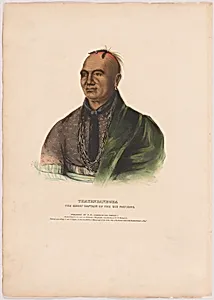
Medium
Classification
Department
Smithsonian Collection
Museum
Smithsonian American Art Museum
Credit
National Portrait Gallery, Smithsonian Institution
Accession Number
NPG.94.109
Rights
Public Domain
Tags
Art Historical Context
**Thayendanegea (1838)** This striking portrait print by artist R. T. captures Thayendanegea, a Mohawk leader also known as Joseph Brant, depicted as a male American Indian interpreter and chief. Adorned with a sash and necklace, the image conveys his dignified status and cultural regalia. Created in 1838 as a print—a medium that allowed widespread dissemination of important figures' likenesses—this work is part of the Smithsonian Collection at the Smithsonian American Art Museum credited to the National Portrait Gallery Smithsonian Institution. Thayanegea played a pivotal role in 18th-century North American history, serving as a diplomat and military leader allied with the British during the Revolutionary War. As an interpreter, he bridged Native American and European worlds, advocating for Mohawk interests amid colonial expansion. Produced over 30 years after his death in 1807, this posthumous print reflects enduring fascination with his legacy, preserving his image for future generations through accessible reproductive techniques like engraving or lithography. In the context of American art, such portraits highlight the complex interplay of Indigenous identity and national narratives. Displayed today, it invites visitors to reflect on leadership, cultural exchange, and the visual traditions that immortalized Native figures in early American portraiture.