
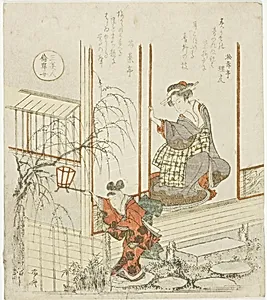
The Daughter of Tomoyasu (Tomoyasu no musume), from the series "Three Beautiful Women (San bijin)"
c. 1820
Medium
Color woodblock print; shikishiban, surimono
Dimensions
21.4 × 18.8 cm (8 7/16 × 7 7/16 in.)
Classification
woodblock print
Department
Arts of Asia
Museum
Art Institute of Chicago
Accession Number
81420
Rights
Public Domain
Art Historical Context
Welcome to the Art Institute of Chicago's of Asia collection, where Ryūryūkyo Shinsai's *The Daughter of Tomoy (Tomoyasu noume)* from the series *Three Beautiful Women (San bij)* captivates with its elegant portrayal of feminine grace. Created around 1820 during Japan's Edo period, this woodblock print showcases Shinsai's mastery in *bijin-ga*—the ukiyo-e tradition of beautiful women. The subject, the daughter of the historical figure Tomoyasu, embodies idealized beauty through her poised kimono, subtle makeup, and serene expression, inviting viewers to appreciate the floating world (*ukiyo*) of fleeting pleasures. Printed in the luxurious *surimono* format—a privately commissioned style often for New Year's greetings or poetry circles—this *shikishiban* (square) sheet measures a intimate 21.4 × 18.8 cm. Surimono like this feature exquisite color woodblock techniques, including fine *karazuri* (embossed patterns) and metallic pigments for a tactile, shimmering effect, far surpassing commercial prints. Shinsai, a leading surimono specialist, often incorporated haiku poems, blending art with literature for elite patrons. This piece highlights the cultural zenith of ukiyo-e, where everyday elegance met artistic innovation, preserving Edo-era aesthetics amid Japan's isolation. A gem of technical and poetic refinement, it reminds us of beauty's timeless allure.