
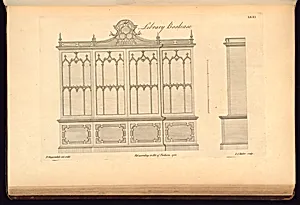
The Gentleman's and Cabinet-Maker's Director
1755
Classification
furniture
Department
Smithsonian Collection
Museum
Smithsonian American Art Museum
Credit
Purchased for the Museum by the Advisory Council
Accession Number
1921-6-450-73
Rights
Public Domain
About this artwork
Research in Progress
Art Historical Context
Welcome to the Smithsonian American Art's exploration of 18th-century design! *The Gentleman's and Cabinetaker's Director* (1755), housed in our Smithsonian Collection and classified among furniture-related artifacts, is a fascinating artifact from the Georgian era. Its evocative title suggests it served as a practical guide for affluent gentlemen and skilled cabinet-makers, likely offering patterns, instructions, or inspirations for crafting high-style furniture. Produced during a time when rococo and neoclassical influences were transforming British and colonial American homes, such directors bridged artistry and craftsmanship, democratizing elegant designs for a growing merchant class. Though the artist remains unknown and research is ongoing, this work's presence in our collection underscores its role in the evolution of decorative arts. Purchased by the Advisory Council, it highlights the museum's commitment to preserving tools of the trade that shaped everyday luxury. Imagine 18th-century workshops buzzing with these pages open, guiding the creation of cabriole-legged chairs or ornate cabinets that defined tasteful living. As studies continue, *The Gentleman's and Cabinet-Maker's Director* invites us to appreciate how printed knowledge fueled innovation in furniture design, blending utility with aspiration in colonial America. (198 words)
About the Artist
Unknown
The artist designated as "Unknown" in our virtual museum's collection exemplifies a poignant chapter in art history: creators whose identities have faded into obscurity despite the enduring power of their work. With only one known artwork attributed to them in our holdings, this figure represents countless anonymous hands that shaped visual culture across centuries. Museums worldwide, including th...