
The Lottery
after 1724
Medium
Etching and engraving; eighth state of eight
Dimensions
sheet: 10 x 12 5/8 in. (25.4 x 32 cm)
Classification
Prints
Department
Drawings and Prints
Museum
Metropolitan Museum of Art, New York, NY
Credit
Harris Brisbane Dick Fund, 1932
Accession Number
32.35(185)
Rights
Public Domain
Tags
Art Historical Context
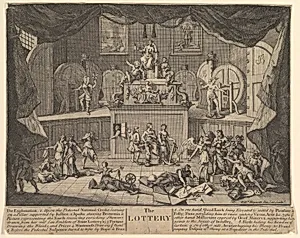
William Hogarth's *The Lottery*, created after 1724, is a masterful etching and engraving that captures the frenzied mania of 18th-century lottery craze. As one of the final eighth states of eight, this print represents the artist's refined culmination of intricate line work, where etching provides fluid spontaneity and engraving adds precise detail. Measuring just 10 x 12 5/8 inches, its compact size belies the bustling satire packed within, now housed in the Metropolitan Museum Art's Drawings and Prints, thanks to the Harris Brisbane Dick Fund of 1932. Hogarth, a pioneering English satirist, skewers the social folly of lotteries—state-sanctioned gambles that lured all classes with promises of quick riches. The scene teems with men and women from every walk of life: eager ticket-buyers, frantic clerks, and even female nudes symbolizing vulnerability and moral exposure amid the chaos. Through exaggerated expressions and dynamic compositions, Hogarth critiques greed and delusion, aligning with his broader moral series like *A Rake's Progress*, which exposed vice in Georgian society. This print's artistic significance lies in Hogarth's innovative narrative technique, blending realism with caricature to educate and entertain. It remains a vivid window into early modern consumer culture, reminding us how gambling's allure transcends time.
About the Artist
William Hogarth · 1697–1764
William Hogarth (1697-1764) was an English painter, printmaker, and pictorial satirist who became the first great English-born artist to attract admiration abroad. Born into poverty in London, the son of a failed schoolmaster who was imprisoned for debt, Hogarth's early experiences with the harsh realities of 18th-century urban life profoundly shaped his artistic vision. After apprenticing with si...