
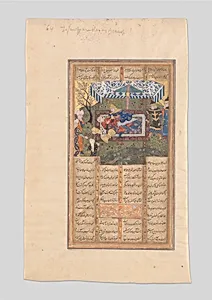
"The Murder of Iraj," Folio from a Shahnama (Book of Kings) of Firdausi
late 15th century
Medium
Ink, watercolor, and gold on paper
Classification
Codices
Department
Islamic Art
Museum
Metropolitan Museum of Art, New York, NY
Credit
Bequest of Carolyn Kane, 2015
Accession Number
2015.796.48
Rights
Public Domain
Tags
Art Historical Context
Step into the dramatic world of Persian epic poetry with *The Murder of Iraj*, stunning folio from a late 15th-century *Shahnama* (Book of Kings) by the legendary poet Abu'l Q Firdausi. This illuminated page captures a pivotal moment from Iran's national epic: the tragic assassination of Iraj, the youngest son of King Feridun, by his jealous brothers Tur and Salm. Composed around 1010 CE, Firdausi's *Shahnama* weaves mythology, history, and moral lessons into over 50,000 verses, celebrating Persian identity amid cultural shifts under Islamic rule. Rendered in ink, watercolor, and gold on paper—a hallmark of Persian miniature painting—this folio exemplifies Timurid-era artistry from the Islamic world. Delicate lines delineate dynamic figures in flowing robes, poised in a tense confrontation amid architectural motifs and lush landscapes. The lavish use of gold illuminates the scene, symbolizing divine light and royal splendor, while vibrant colors heighten the emotional intensity of betrayal and death. Housed in the Metropolitan Museum of Art's Islamic Art Department (Bequest of Carolyn Kane, 2015), this codex leaf reflects the *Shahnama*'s enduring cultural power. Manuscripts like this were prized treasures for elite patrons, blending poetry and painting to preserve pre-Islamic Iranian heritage for generations. A poignant reminder of fratricide's consequences, it invites us to ponder timeless themes of power and loyalty.
About the Artist
Abu'l Qasim Firdausi · 935–1020
Abu'l Qasim Firdausi, born around 940 in the village of Paj near Tus in Khorasan (modern-day Iran), emerged from a family of landed gentry known as dehqans, who preserved ancient Iranian oral traditions amid the cultural renaissance of the Samanid Empire. Little is documented about his early life or formal training, though he likely received a basic education including Arabic literacy, immersing h...