
The Restful Harmony Library
late 19th–early 20th century
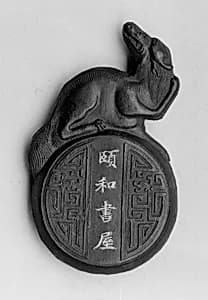
Medium
Pine soot and binding medium; inscribed in gilt
Dimensions
W. 1 3/4 in. (4.4 cm); L. 3 in. (7.6 cm)
Classification
Ink
Culture & Period
China · late Qing dynasty (1644–1911) or early Republic period (1912–49)
Department
Asian Art
Museum
Metropolitan Museum of Art, New York, NY
Credit
Rogers Fund, 1930
Accession Number
30.76.279
Rights
Public Domain
Tags
Art Historical Context
This delicate ink stick, titled *The Restful Harmony Library*, was created by the Chinese artist Jian Guzhai during the late Qing dynasty or early Republic period. Measuring just three inches long, the small rectangular form reflects the refined craftsmanship of traditional Chinese ink makers, who produced these objects not only for practical use but also as treasured scholarly items. The work belongs to the Metropolitan Museum of Art’s Asian Art collection and carries the evocative name suggesting it may have been made for a private library or study. Crafted from pine soot and a binding medium, the ink stick features gilt inscriptions that highlight its decorative and commemorative value. Pine-soot ink has been central to Chinese calligraphy and painting for centuries, prized for its deep black tone and smooth consistency. The presence of animal motifs, noted in the museum’s tags, likely adds symbolic layers—common in late imperial China—evoking harmony with nature or scholarly virtues. As a product of a transitional era, this piece bridges centuries-old artistic traditions with the changing cultural landscape of early twentieth-century China. Its compact size and elegant detailing invite viewers to appreciate the intimate connection between material, maker, and the world of letters it was meant to serve.
About the Artist
Jian Guzhai
Jian Guzhai — meaning roughly "Studio for Appreciating the Antique" — was a renowned ink-tablet workshop operated by the Wang Jinsheng family in the Huizhou region of Anhui Province, China, one of the historic centers of fine inkstick production. Active during the late Qing dynasty (1644–1911) and possibly into the early Republic period (1912–49), the workshop was celebrated for producing ink tabl...