
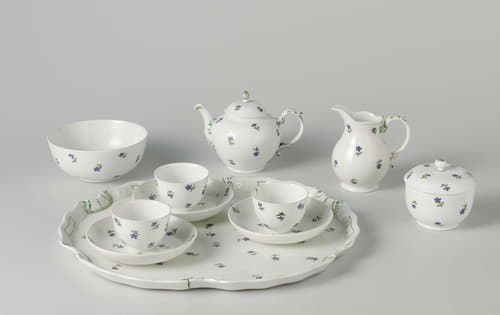
Theeservies bestaande uit een blad, theepot, melkkan, suikerpot, spoelkom en elf koppen en schotels, beschilderd met korenbloemen
ca. 1784
Medium
painting technique
Rights
Public Domain
About this artwork
(zie deelrecords)
Art Historical Context
This exquisite tea service, crafted around 1784 by the Manufacture Oud-Loosdrecht, represents the refined elegance of late eighteenth-century Dutch porcelain production. Comprising a tray, teapot, milk jug, sugar bowl, rinsing bowl, and eleven cups with saucers, the set was designed for the intimate rituals of drinking that had become a hallmark of European aristocratic and bourgeois life. The factory, active in the Netherlands from 1774 to 1789, specialized in delicate tableware that blended functionality with artistic sophistication. The service is adorned with delicate cornflower motifs, rendered through meticulous hand-painting techniques typical of the period. These blue blossoms, scattered across the white porcelain surfaces, evoke both natural simplicity and contemporary fashion, as cornflowers symbolized admiration and were popular in decorative arts of the time. Each piece demonstrates the careful attention to detail that distinguished Oud-Loosdrecht wares, with fine brushwork creating a sense of lightness and harmony. As a complete ensemble, this tea service highlights the cultural importance of porcelain in social gatherings, reflecting Enlightenment-era tastes for beauty in everyday objects. Its survival as a coordinated set offers visitors a glimpse into the refined domestic world of the late 1700s.