
Trophy Design
Classification
Department
Smithsonian Collection
Museum
Smithsonian American Art Museum
Credit
Purchased for the Museum by the Advisory Council
Accession Number
1921-6-341-74
Rights
Public Domain
About this artwork
Research in Progress
Art Historical Context
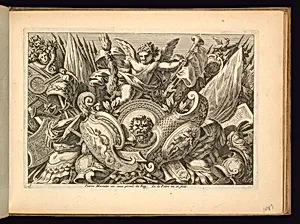
Jean Le Pautre (1618–1682), a French engraver, designer, and architect, created this *Trophy Design* sometime between 1657 and 1682, during the opulent Baroque era under Louis XIV. Renowned for his intricate ornamental prints, Le Pautre contributed to the grandeur of Versailles and popularized elaborate motifs that adorned furniture, walls, and architecture across Europe. As a master of the grotesque style—a playful fusion of floral, animal, and symbolic elements—his works bridged fine art and decorative crafts, influencing generations of artisans. This print exemplifies the 17th-century "trophy," a decorative arrangement of symbolic objects like weapons, musical instruments, or harvest tools, evoking triumph, abundance, or classical virtues. Le Pautre's designs were highly sought after for their dynamic compositions and rhythmic lines, often etched with remarkable precision to guide craftsmen. Though the exact medium remains under study, such prints were typically produced via etching or engraving, making them affordable models for replication in lavish interiors. Housed in the Smithsonian American Art Museum's collection, acquired through the Advisory Council, this piece highlights the transatlantic appeal of French Baroque design in American holdings. It invites us to appreciate how a simple print could inspire monumental splendor, connecting viewers to the Sun King's radiant world. (198 words)