
Tsuba
mid- 19th century
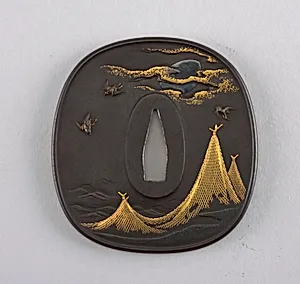
Medium
metalwork
Classification
metalwork
Department
Smithsonian Collection
Museum
Smithsonian American Art Museum
Credit
Bequest of George Cameron Stone
Accession Number
1936-4-847
Rights
Public Domain
About this artwork
Research in Progress
Art Historical Context
**Tsuba by Tenkōdō Hidekuni** ed by the skilled Japanese metalworker Tenkōdō Hidekuni (1825–1891) from Kawayashi during Japan's mid-19th century period, this *tsuba*—a handguard for a samurai sword—exemplifies the exquisite metalwork traditions of the era. Hidekuni, active in a time of artistic refinement just before the Meiji Restoration, specialized in these functional yet decorative fittings that protected the wielder's hand while adorning the katana or wakizashi. Tsuba were more than mere armor; they were miniature canvases for storytelling, often featuring motifs from nature, mythology, or daily life, rendered through sophisticated techniques like piercing, inlaying, and patination of metals such as iron, copper alloys, and precious overlays. This piece, now in the Smithsonian American Art Museum's collection (Bequest of George Cameron Stone), highlights the cultural pinnacle of Japanese sword fittings, blending utility with artistry in a samurai society valuing both martial prowess and aesthetic harmony. As research continues on this work, it invites visitors to appreciate the precision of Edo-period craftsmanship, where every curve and surface spoke to deeper philosophical ideals of *wabi-sabi*—beauty in imperfection and transience. A testament to Japan's enduring metalworking legacy. (178 words)