
Two Daughters of Menna, Tomb of Menna
ca. 1400–1352 B.C.
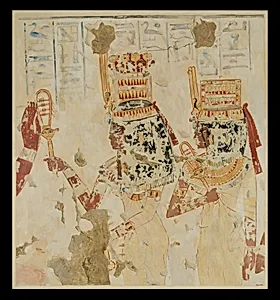
Medium
Tempera on paper
Dimensions
Facsimile: H. 49.5 × W. 45 cm (19 1/2 × 17 11/16 in.); Scale: 1:1; Frame: H. 52.4 × W. 48.3 cm (20 5/8 × 19 in.)
Classification
Facsimile, Menna (TT 69), daughters,music, sistrum, menat, modius
Period
New Kingdom
Department
Egyptian Art
Museum
Metropolitan Museum of Art, New York, NY
Credit
Rogers Fund, 1930
Accession Number
30.4.194
Rights
Public Domain
Art Historical Context
This facsimile captures the elegant figures of two daughters from the Tomb of Menna, an important New Kingdom burial site dating to Dynasty 18 (ca. 1400–1352 B.C.). Created by Charles K. Wilkinson using tempera on paper at a precise 1:1 scale, the work faithfully reproduces the graceful poses and vibrant details of the original wall painting. Such copies were made to preserve and share the artistry of Egyptian tombs that remain largely inaccessible to the public. The original scene reflects the refined artistic conventions of the New Kingdom, a period celebrated for its naturalistic yet idealized depictions of daily life and family. Wilkinson’s meticulous technique highlights the delicate lines and harmonious colors typical of tomb art, which served both decorative and spiritual purposes—ensuring the deceased’s continued prosperity in the afterlife. Housed in the Metropolitan Museum of Art’s Department of Egyptian Art since 1930, this facsimile offers visitors an intimate view of ancient Egyptian culture. It underscores the enduring appeal of these intimate family portrayals while protecting the fragile originals for future generations.
About the Artist
Charles K. Wilkinson · 1897–1986
Charles K. Wilkinson (1897–1986), born Charles Kyrle Wilkinson in London on October 13, 1897, was the son of Horace W. Wilkinson, a stained-glass window maker, and Frances Adkins. Serving in World War I, he honed his artistic skills at the Slade School of Fine Art, University College London, where the influential director Henry Tonks shaped the rigorous training of a generation of draughtsmen. In ...