
鑑貞筆 瀟湘八景中の二景図|Two Views from the Eight Views of the Xiao and Xiang Rivers
early 16th century
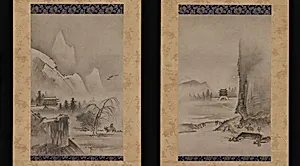
Medium
Pair of hanging scrolls; ink and color on paper
Dimensions
Image (a): 18 1/16 × 11 3/4 in. (45.8 × 29.9 cm) Overall with mounting (a): 51 15/16 × 16 3/8 in. (132 × 41.6 cm) Overall with knobs (a): 51 15/16 × 18 1/8 in. (132 × 46 cm) Image (b): 18 1/8 × 11 3/4 in. (46 × 29.9 cm) Overall with mounting (b): 52 1/16 × 16 5/16 in. (132.2 × 41.5 cm) Overall with knobs (b): 52 1/16 × 18 1/8 in. (132.2 × 46 cm)
Classification
Paintings
Culture & Period
Japan · Muromachi period (1392–1573)
Department
Asian Art
Museum
Metropolitan Museum of Art, New York, NY
Credit
Mary Griggs Burke Collection, Gift of the Mary and Jackson Burke Foundation, 2015
Accession Number
2015.300.52a, b
Rights
Public Domain
Tags
Art Historical Context
This exquisite pair of hanging scrolls, *Two Views from the Eight Views of the Xiao and Xiang Rivers*, was created by the Japanese artist Kantei in the early 16th century during the Muromachi period (1392–1573). Rendered in ink and light color on paper, these intimate works (each image about 18 × 12 inches) exemplify the refined elegance of Japanese landscape painting. Hanging scrolls like these were designed for private contemplation, unrolled in alcoves during tea ceremonies or Zen meditation, allowing viewers to immerse themselves in misty rivers and towering mountains. The "Eight Views of the Xiao and Xiang Rivers" is a timeless Chinese motif from the Song dynasty that flourished in Muromachi Japan, particularly among Zen monk-artists. Kantei captures two of these poetic scenes—evoking the serene yet melancholic beauty of Hunan province's waterways—with delicate ink washes and subtle color accents. This technique highlights the period's shift toward expressive, minimalist landscapes, blending Chinese literati ideals with Japanese sensitivity to nature's transience. Now in the Metropolitan Museum of Art's Mary Griggs Burke Collection, these scrolls offer a window into Muromachi Japan's cultural synthesis of Zen Buddhism and imported Chinese aesthetics, inviting us to pause and ponder the quiet poetry of distant horizons.