
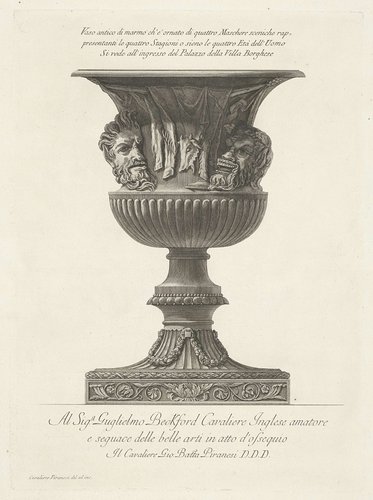
Vaas met maskers
Medium
etching
Dimensions
353; 530
Rights
Public Domain
About this artwork
verzamelaarsmerk, verso, gestempeld: Lugt 2228
Art Historical Context
**Vaas met Maskers (Vase with Masks)**Giovanni Battista Piranesi,1778 Etching, 530 × 353 mm Step into the shadowy grandeur of 18th-century with Giovanni Battista Piranesi's *Vaas met Maskers a masterful etching from 1778. Piranesi, the visionary Italian artist and architect (1720–1778), was obsessed with antiquity, producing intricate prints that captured real and imagined Roman artifacts. This work likely belongs to his celebrated series *Vasi, Candelabri, Cippi, Tripodi, ed Altri Monumenti Antichi* (Vases, Candelabras, Cippi, Tripods, and Other Ancient Monuments), published that year. It depicts an ornate vase adorned with theatrical masks, evoking the grotesque and dramatic motifs of classical urns—symbols of ancient rituals, theater, and the macabre. Piranesi's etching technique shines here: his virtuoso use of dense cross-hatching and burin work creates astonishing depth, texture, and illusionistic light on the page. At over half a meter tall, the plate's scale amplifies its monumental feel, blurring the line between precise archaeological documentation and fantastical invention. This neoclassical passion fueled the Enlightenment's revival of Roman heritage, influencing architects and designers across Europe. Bearing the collector's mark Lugt 2228 (Rijksprentenkabinet) on the verso, this print connects us to centuries of connoisseurship. A testament to Piranesi's enduring legacy, it invites you to ponder the mysteries of the past through one artist's unbridled imagination.
About the Artist
Giovanni Battista Piranesi · 1720–1778
Giovanni Battista Piranesi (1720–1778) was an Italian printmaker, architect, and antiquarian whose visionary etchings of Rome and imaginary prisons revolutionized architectural representation and profoundly influenced both Neoclassicism and Romanticism. Piranesi stands as one of the most important printmakers of the eighteenth century, fundamentally shaping European perceptions of ancient Rome an...