
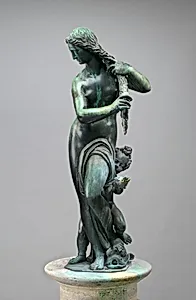
Venus and Cupid
c. 1575/1580
Medium
bronze
Dimensions
overall (height): 124.5 cm (49 in.) gross weight: 264 lb.
Classification
Sculpture
Department
CSD
Museum
National Gallery of Art, Washington, D.C.
Credit
Gift of John and Henrietta Goelet, in memory of Thomas Goelet, and Patrons' Permanent Fund
Accession Number
1991.242.1
Rights
Public Domain
Art Historical Context
This elegant bronze sculpture of Venus and Cupid, created around 1575–1580 by a follower of Giovanni Bologna (known as Giambologna), captures the graceful dynamism of late Renaissance Mannerism. Standing nearly 125 centimeters tall, the work reflects the period’s fascination with mythological themes and the human form in motion. Giambologna, a Flemish-born sculptor active in Florence, was renowned for his fluid bronze figures that twist in serpentine poses, and his followers carried forward this innovative approach to composition and surface detail. Bronze casting allowed artists of this era to achieve remarkable delicacy in modeling drapery, hair, and expressive gestures while ensuring durability for both indoor and garden settings. The intimate portrayal of Venus, the goddess of love, alongside her winged son Cupid highlights the enduring appeal of classical mythology in 16th-century Europe, where such subjects often symbolized beauty, desire, and familial bonds. Housed in the National Gallery of Art thanks to a generous gift, this piece invites viewers to appreciate the technical mastery and poetic storytelling that defined Mannerist sculpture. Its balanced proportions and lively interaction between the figures continue to charm audiences centuries later.