
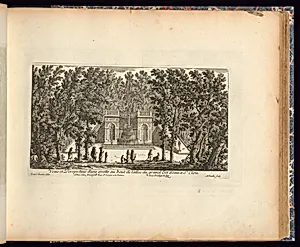
Veuë et Perspective d’une grotte au bout de l’allée du grand jet d’eau a St. Clou
Classification
Department
Smithsonian Collection
Museum
Smithsonian American Art Museum
Credit
Purchased for the Museum by the Advisory Council
Accession Number
1921-6-533-85
Rights
Public Domain
About this artwork
Research in Progress
Art Historical Context
Israel Silvestre's *Veuë et Perspective d’une grot au bout de l’all du grand jet d’eau St. Clou* (ca. 1680–1695) offers a captivating glimpse into the opulent gardens of the Château de Saint-Cloud, favored royal retreat near Paris during Louis XIV's reign. As a master French etcher and draughtsman (1621–1691), Silvestre in precise topographical views, or *vedute*, that immortalized the era's grand landscapes. This print likely captures the dramatic perspective of a grotto at the avenue's end, framing the estate's iconic "grand jet d’eau"—a towering fountain symbolizing the Sun King's mastery over nature. Created as a print in the late Baroque period, the work reflects the artistic vogue for documenting Versailles-inspired gardens designed by André Le Nôtre. Saint-Cloud's manicured alleys, water features, and architectural follies embodied French absolutism, blending artifice with natural spectacle. Silvestre's technique, probably etching, allowed for intricate details in foliage, stonework, and receding space, making such views accessible to collectors beyond the nobility. Housed in the Smithsonian American Art Museum's collection, this piece highlights 17th-century printmaking's role in disseminating cultural prestige. Though research continues, it invites us to wander virtually through a lost paradise of royal splendor.