
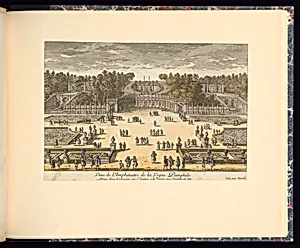
Veue de l’Amphiteatre de la Vigne Pamphile
late 17th century
Medium
Classification
Department
Smithsonian Collection
Museum
Smithsonian American Art Museum
Credit
Purchased for the Museum by the Advisory Council
Accession Number
1921-6-533-247
Rights
Public Domain
About this artwork
Research in Progress
Art Historical Context
Gabriel Perelle’s *Veue de l’Amphiteatre de la Vigne Pamphile* captures a late-17th-century view of ancient ruins nestled within the Pamphili family’s Roman vineyard. Perelle, a prolific French printmaker active during the reign of Louis XIV, specialized in elegant topographical views that brought distant classical sites to European audiences. His prints often blended accurate observation with a romantic sense of antiquity, reflecting the period’s growing fascination with Rome’s layered history. As an etching or engraving, the medium allowed Perelle’s delicate line work to circulate widely, functioning almost like early travel souvenirs for collectors who might never visit Italy. The scene likely depicts remnants of an ancient amphitheater on the grounds of what became Villa Doria Pamphili, underscoring how Renaissance and Baroque estates preserved—and sometimes reshaped—classical monuments. Acquired by the Smithsonian American Art Museum through its Advisory Council, the print offers today’s visitors a window into both the enduring appeal of Rome’s ruins and the artistry of French printmaking at its height.