
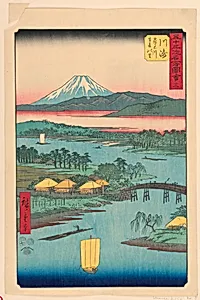
View of Mt. Fuji
Medium
Classification
Department
Smithsonian Collection
Museum
Smithsonian American Art Museum
Credit
Gift of the Estate of Mrs. Robert H. Patterson
Accession Number
1941-31-202
Rights
Public Domain
About this artwork
Research in Progress
Art Historical Context
Ando Hiroshige (1797–1858), one of Japan's most celebrated ukiyo-e masters, captured the ethereal beauty of Mount Fuji in 1856 woodblock print. A pioneer of landscape prints during the late Edo period, Hiroshige everyday scenes into poetic visions, blending precise observation with atmospheric effects. "View of Mt. Fuji exemplifies his signature style, likely showcasing the sacred peak—Japan's highest mountain and a symbol of national identity—from a distant vantage, evoking tranquility and the transient nature of life, core to ukiyo-e's "floating world" philosophy. Printed using intricate woodblock techniques, the work features vibrant colors layered through multiple carved blocks, a process that made such art accessible to the masses. Hiroshige's innovative use of perspective and subtle gradations of sky and water brought Western influences into traditional Japanese aesthetics, influencing later Impressionists like Van Gogh. This piece, now in the Smithsonian American Art Museum's collection (gift of the Estate of Mrs. Robert H. Patterson), reflects the era's fascination with nature amid social change. Mount Fuji, revered in Shinto beliefs and poetry, appears in countless Hiroshige prints, underscoring its cultural endurance. Though research on this specific view continues, it invites visitors to ponder Japan's harmonious bond with its landscapes.