
Vignette
Classification
Department
Smithsonian Collection
Museum
Smithsonian American Art Museum
Credit
Smithsonian American Art Museum
Accession Number
1919-10-52
Rights
Public Domain
About this artwork
Research in Progress
Art Historical Context
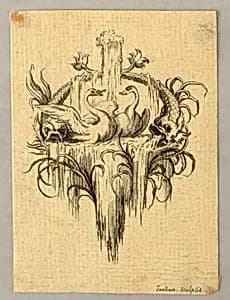
**Vignette** *François Joullain (France, 1697–1778), 1725–1750* Etching or engraving (print), Smithsonian American Art Museum Created during the elegant Rococo era in 18th-century France, Joullain's *Vignette* exemplifies the artist's mastery as a printmaker and engraver working in Paris. Joull, active from the early 1700s, specialized in delicate reproductive prints and ornamental designs, often drawing from the whimsical, curvaceous motifs of contemporaries like Watteau. This undated work from his mature period (1725–1750) likely served as a decorative element for books, title pages, or albums, capturing the period's love for intricate, fanciful embellishments amid the opulent courts of Louis XV. As a print, *Vignette* highlights the technical precision of 18th-century engraving techniques, where fine lines and subtle tonal gradations brought lush foliage, figures, or architectural fantasies to life on paper. These small-scale designs were cultural staples, bridging fine art and everyday printing, and reflect France's influence on European decorative arts. Though research continues, Joullain's vignettes remain cherished for their playful sophistication, offering a window into the refined tastes of the Ancien Régime. (178 words)