
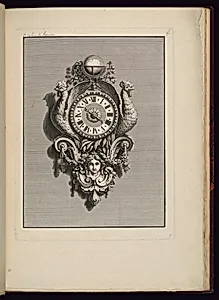
Wall Clock (Cartel) Design (Title Page Before Lettering)
Medium
Classification
Department
Smithsonian Collection
Museum
Smithsonian American Art Museum
Credit
Purchased for the Museum by the Advisory Council
Accession Number
1921-6-310-32
Rights
Public Domain
About this artwork
Research in Progress
Art Historical Context
Step into the elegant world of 18th design with *Wall Clock (Cartel) (Title Page Before Letter)*, a captivating print by Jean François Forty active between 1775 and 1790. Created sometime between 1775 and1794, this work captures the preliminary vision for an ornate wall clock—or *cartel* in French—before any text was added. As a print from the Smithsonian Art Museum's collection, by the Advisory Council, it how graphic arts served as blueprints for luxury craftsmanship. In the late Enlightenment era, prints like this were vital tools for disseminating sophisticated designs across Europe and beyond. Forty, likely a French designer or engraver, contributed to the booming trade in decorative objects, where wall clocks were status symbols blending functionality with opulent aesthetics. The medium of print allowed precise replication, enabling artisans from Paris workshops to colonial makers to interpret these intricate motifs, reflecting the era's fascination with symmetry, gilding, and architectural flair. Though research on this piece is ongoing, its presence in the Smithsonian underscores its role in bridging European design traditions with American collections. Visitors will appreciate how such humble prints fueled the grandeur of grand salons, offering a window into the creativity that defined pre-Revolutionary luxury. (198 words)