
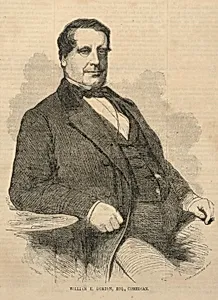
William E. Burton, Esq., Comedian, from Ballou's Pictorial Drawing-Room Companion, December 4, 1858
1858
Medium
Graphic Arts-Print
Classification
Graphic Arts-Print
Department
Smithsonian Collection
Museum
Smithsonian American Art Museum
Credit
Smithsonian American Art Museum, The Ray Austrian Collection, gift of Beatrice L. Austrian, Caryl A. Austrian and James A. Austrian
Accession Number
1996.63.153
Rights
Public Domain
Tags
Art Historical Context
Step into the lively world of 19th American entertainment with Winslow Homer's portrait *William E. Burton, Esq., Comedian*, published in *Ballou'sorial Drawing-Room Companion on December 4, 1858. This waist-length depiction captures the expressive face of William E. Burton, a British-born comedian who dazzled audiences in the U.S. with his theatrical prowess. Homer, then a young illustrator honing his craft, renders Burton with sharp detail and charisma, highlighting the era's fascination with celebrity performers. Created as a graphic arts print—likely a wood engraving, the dominant medium for mass-produced illustrations— this work exemplifies Homer's early commercial artistry. Before his fame as a realist painter of American life and seascapes, Homer contributed to popular periodicals, mastering techniques that brought news, culture, and personalities into middle-class homes. *Ballou's Pictorial*, a Boston-based weekly rivaling *Harper's Weekly*, showcased such images to eager readers, blending art with journalism. This piece holds cultural significance as a snapshot of antebellum theater, where figures like Burton bridged European traditions and burgeoning American showmanship. Housed in the Smithsonian American Art Museum's Ray Austrian Collection, it invites us to appreciate how prints democratized portraiture, making stardom accessible beyond the elite canvas. A charming glimpse into Homer's roots and a performer's legacy!
About the Artist
Winslow Homer · 1836–1910
Winslow Homer (1836-1910) was one of America's greatest painters and a preeminent figure in 19th-century American art. Largely self-taught, Homer began his career as a commercial illustrator and Civil War correspondent for Harper's Weekly before becoming renowned for his powerful marine subjects and landscape paintings. His mastery of both oil and watercolor, combined with his uncompromising reali...