
Arts of Asia — Page 106
9,604 artworks · Art Institute of Chicago
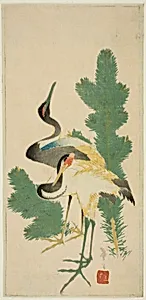
Pine and cranes
Katsushika Taito II, c. 1830/44
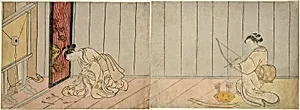
The Archery Gallery
Suzuki Harunobu, 1765
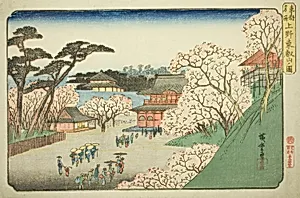
Toeizan Temple at Ueno (Ueno Toeizan no zu), from the series "Famous Places in the Eastern Capital (Toto meisho)"
Kitao Shigemasa, c. 1832/38
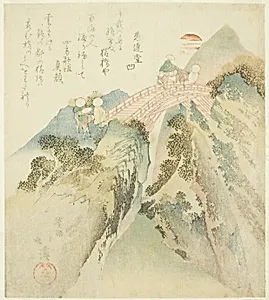
Crossing the Monkey Bridge
Totoya Hokkei, 1824
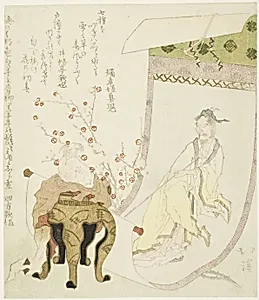
A painting of Daoist immortal Huang Chuping (Jp: Ko Shohei)
Totoya Hokkei, 1823
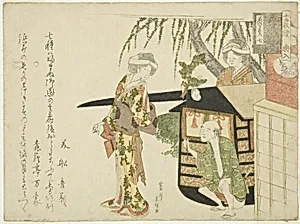
No. 7: The Bridal Procession (Koshi-iri), from the series "The Mouses' Wedding (Nezumi no yome-iri)"
Hishikawa Sori III, 1804
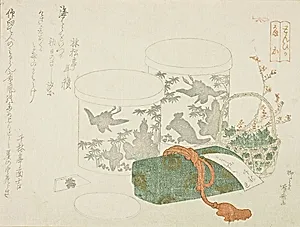
A Pair of Boxes, a Letter Box, and Plum Blossoms
Ryuryukyo Shinsai, n.d.
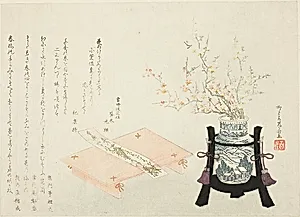
Red and White Plum Blossoms with Poem Slip
Ryuryukyo Shinsai, About 1810
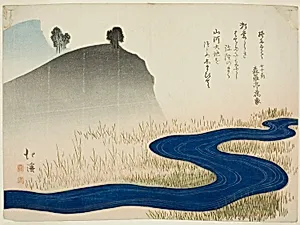
A Mountainous Landscape with a Stream
Totoya Hokkei, 1827
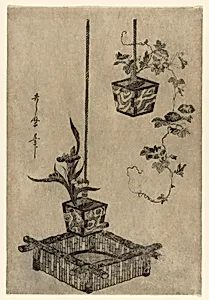
Arrangements of Irises and Morning Glories
Kitagawa Utamaro, About 1785
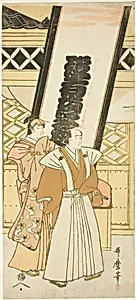
Matsumoto Koshiro IV and Nakayama Tomisaburo, the left hand sheet of a triptych entitled “Six Actors Likened to the Immortal Poets" ("Yakusha Rokkasen")
Kitagawa Utamaro, c. 1784
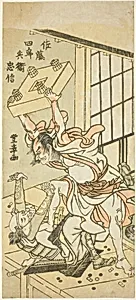
Sato Shirobei Tadanobu (Sato Shirobei Tadanobu)
Kitagawa Utamaro, c. 1776–80
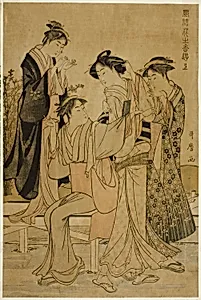
Elegant Pleasures: The Scent of Flowers, right (Furyu hana no ka asobi, jo)
Kitagawa Utamaro, c. 1783
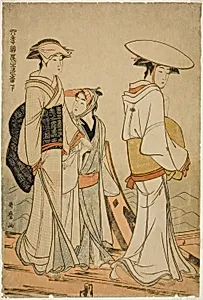
Pleasures of the Four Seasons: Colors and Scents of Flowers, left (Shiki no asobi hana no iroka, ge)
Kitagawa Utamaro, c. 1783
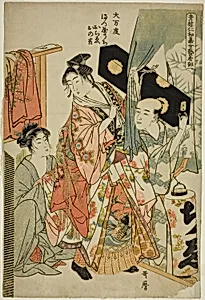
Omando: Ochie, Onokichi of the Matsuya, from the series Female Geisha Section of the Yoshiwara Niwaka Festival (Seiro niwaka onna geisha no bu) (Omando, Matsuya uchi Ochie, Onokichi)
Kitagawa Utamaro, 1783
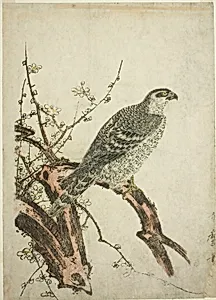
Hawk on a Plum Branch
Kitagawa Utamaro, c. 1796/1804
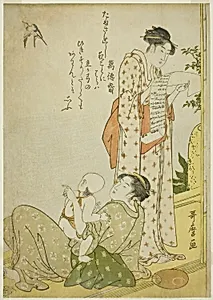
Evening Cool on the Verandah (Ensaki no yusuzumi): Genre scenes with kyoka poems, in aiban format (Kyoka-iri aiban fuzoku zu)
Kitagawa Utamaro, c. 1788/90
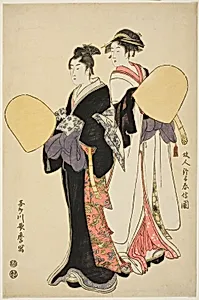
Young Couple Dressed as Mendicant Monks
Kitagawa Utamaro, c. 1794
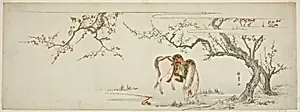
Horse beneath a Flowering Plum Tree
Kitagawa Utamaro, c. 1797/99
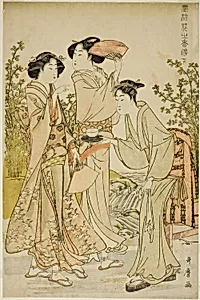
Elegant Pleasures: The Scent of Flowers, left (Furyu hana no ka asobi, ge)
Kitagawa Utamaro, c. 1783
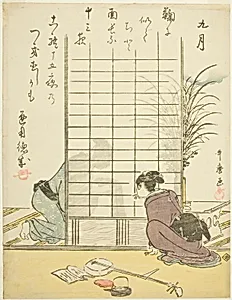
The Ninth Month (Kugatsu), from an untitled series of genre scenes in the twelve months, with kyoka poems
Kitagawa Utamaro, c. 1792/93
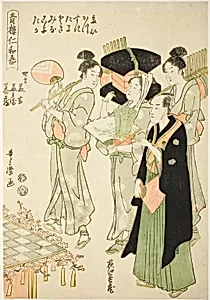
Seiro niwaka
Kitagawa Utamaro, n.d.
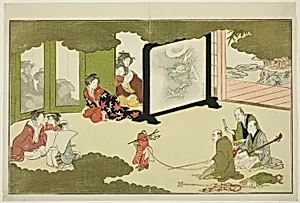
Performance of a Trained Monkey, from an illustrated poetry anthology entitled "The Young God Ebisu (Waka Ebisu)"
Kitagawa Utamaro, 1789
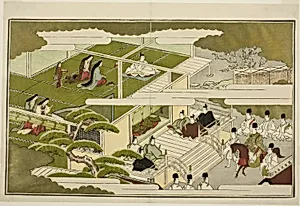
New Year at Court, from the illustrated kyoka anthology "The Young God Ebisu (Waka Ebisu)"
Kitagawa Utamaro, New Year, 1789
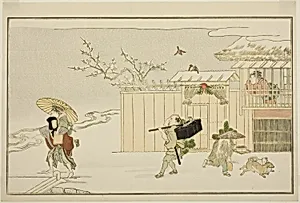
Delivering New Year Gifts in the Snow, from the illustrated kyoka anthology "The Young God Ebisu (Waka Ebisu)"
Kitagawa Utamaro, New Year, 1789
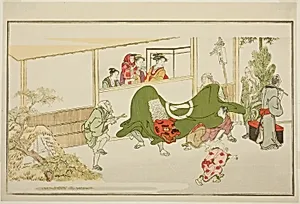
New Year Street-Performers, from the illustrated kyoka anthology "The Young God Ebisu (Waka Ebisu)"
Kitagawa Utamaro, New Year, 1789
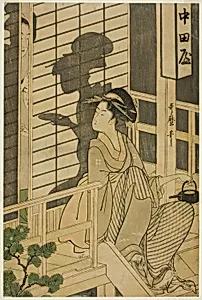
The Nakadaya teahouse
Kitagawa Utamaro, c. 1794/95
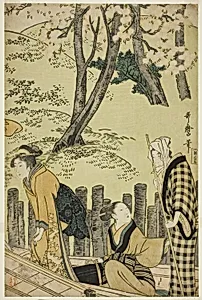
The Embankment at Mimeguri
Kitagawa Utamaro, 1799
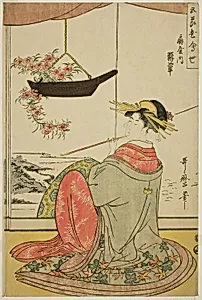
The Courtesan Hisui of the Fan House (Ogiya uchi Hisui), from the series The Five Festivals Flower Competition (Gosechi hana awase)
Kitagawa Utamaro, About 1789–1801
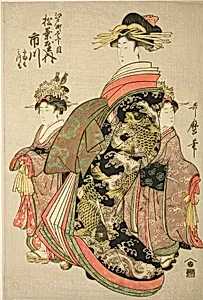
The Courtesan Ichikawa of the Matsubaya in Edo-machi Itchome, with her Child Attendants Tamamo and Mitsumo
Kitagawa Utamaro, c. 1803
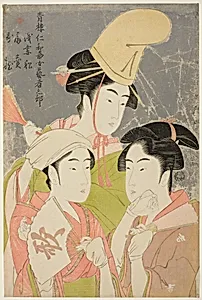
Seiro niwaka onna geisha no bu : Asazumabune Ogiuri Uta.....
Kitagawa Utamaro, 1793
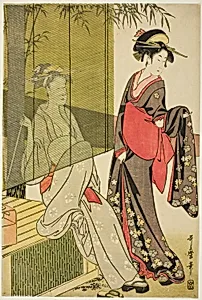
Drying and stretching cloth
Kitagawa Utamaro, c. 1796/97
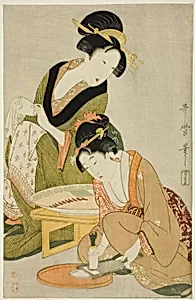
Preparing a Meal
Kitagawa Utamaro, c. 1798/99
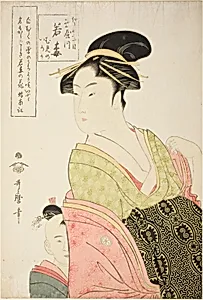
Wakaume of the Tamaya in Edo-cho itchome, and her child attendants Mumeno and Iroka (Edo-cho itchome, Tamaya uchi Wakaume Mumeno Iroka)
Kitagawa Utamaro, c. 1793/94
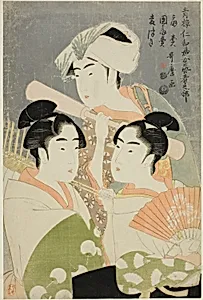
Folding Fan Seller, Round Fan Seller, and Barley Pounder (Ogi-uri, uchiwa-uri, mugi-tsuki), from the series "Female Geisha Section of the Yoshiwara Niwaka Festival (Seiro niwaka onna geisha no bu)"
Kitagawa Utamaro, 1793
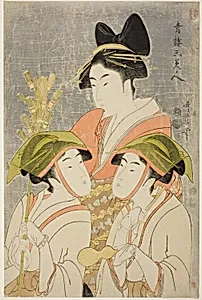
Three Beauties of Yoshiwara (Seiro san bijin)
Kitagawa Utamaro, 1793
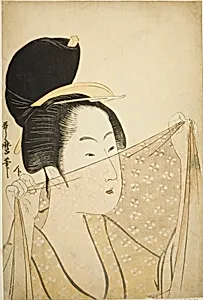
Woman Holding up a Piece of Fabric (Nuno o kazasu onna)
Kitagawa Utamaro, c. 1795/96
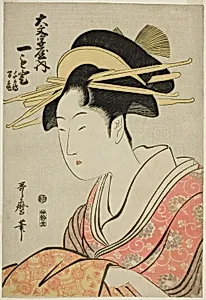
Hitomoto of the Daimonjiya with Attendants Senkaku and Banki
Kitagawa Utamaro, n.d.
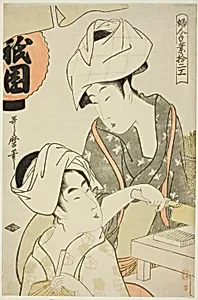
Women Preparing Gion Bean Curd, from the series "Twelve Types of Women’s Handicraft (Fujin tewaza juni-ko)"
Kitagawa Utamaro, c. 1798/99
![Somenosuke of the Matsubaya, [whose attendants are] Wakagi, Wakaba (Matsubaya uchi Somenosuke, Wakagi, Wakaba), from the series “Array of Supreme Beauties of the Present Day" ("Toji zensei bijin-zoroe") by Kitagawa Utamaro](https://images.artheonmuseum.org/aic/thumb/somenosuke-of-the-matsubaya-whose-attendants-are-aic-23912.webp)
Somenosuke of the Matsubaya, [whose attendants are] Wakagi, Wakaba (Matsubaya uchi Somenosuke, Wakagi, Wakaba), from the series “Array of Supreme Beauties of the Present Day" ("Toji zensei bijin-zoroe")
Kitagawa Utamaro, 1794
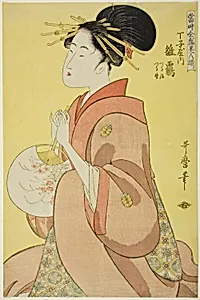
Hinazuru of the Chojiya, Whose Attendants Are Tsuruji and Tsuruno (Chojiya uchi Hinazuru, Tsuruji, Tsuruno), from the series "Array of Supreme Beauties of the Present Day (Toji zensei bijin-zoroe)"
Kitagawa Utamaro, 1794
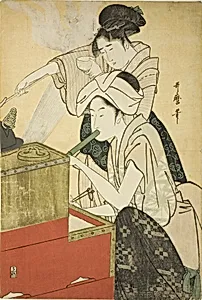
Kitchen Scene
Kitagawa Utamaro, c. 1794/95
![Hour of the Monkey [4pm] (Saru no koku), from the series "Sundial of Young Women (Musume hi-dokei)" by Kitagawa Utamaro](https://images.artheonmuseum.org/aic/thumb/hour-of-the-monkey-4pm-saru-no-koku-from-the-aic-23915.webp)
Hour of the Monkey [4pm] (Saru no koku), from the series "Sundial of Young Women (Musume hi-dokei)"
Kitagawa Utamaro, c. 1794/95
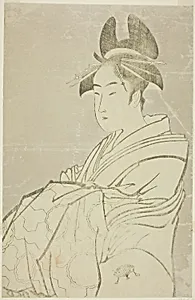
Miyahito of the Ogiya, Whose Assistants Are Tsubaki and Shirabe (Ogiya uchi Miyahito, Tsubaki, Shirabe)
Kitagawa Utamaro, 1793-94
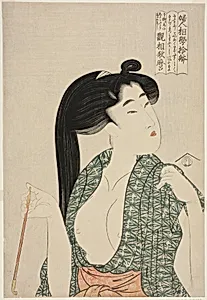
Pipe, from the series Ten Types in the Physiognomic Study of Women (Fujin sogaku juttai) (Kiseru)
Kitagawa Utamaro, 1802/03
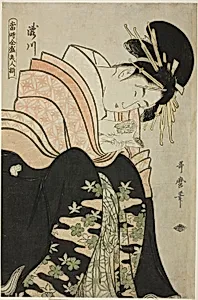
Takigawa, from the series "Array of Supreme Beauties of the Present Day (Toji zensei bijin zoroe)"
Kitagawa Utamaro, c. 1794
![Hour of the Ox [2am] (Ushi no koku), from the series "The Twelve Hours in Yoshiwara (Seiro juni toki tsuzuki)" by Kitagawa Utamaro](https://images.artheonmuseum.org/aic/thumb/hour-of-the-ox-2am-ushi-no-koku-from-the-series-aic-23947.webp)
Hour of the Ox [2am] (Ushi no koku), from the series "The Twelve Hours in Yoshiwara (Seiro juni toki tsuzuki)"
Kitagawa Utamaro, c. 1794
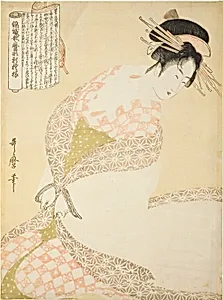
The White Coat, from the series "New Patterns of Brocade Woven in Utamaro Style (Nishiki-ori Utamaro-gata-moyo)"
Kitagawa Utamaro, c. 1796/98