
Arts of Asia — Page 165
9,604 artworks · Art Institute of Chicago
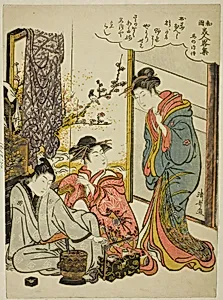
Uma no Naishi, from the series "Modern Versions of Famous Japanese Beauties (Wakoku bijin Yatsushishu)
Torii Kiyonaga, c. 1781
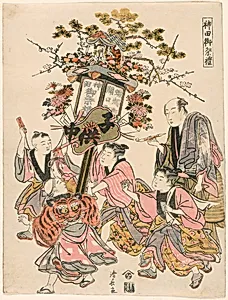
Carrying a Lantern Decorated with a Pavilion, Gohei, Flowers, and Fan (Sekiguchi-cho Rosoku-cho no banto), from the series "The Festival of the Kanda Shrine (Kanda go-sairei)"
Torii Kiyonaga, 1779
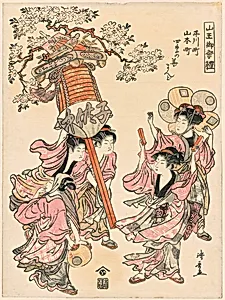
Carrying a Lantern Decorated with the Flowers of the Four Seasons (Hirakawa-cho Yamamoto-cho shiki no hana mando) from the series "The Festival of the Sanno Shrine (Sanno go-sairei)"
Torii Kiyonaga, 1780
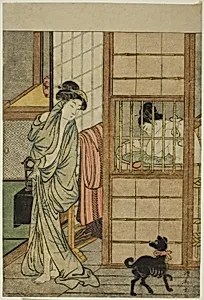
Woman After a Bath, from "Comparison of Alluring Beauties (Irokurabe enpu sugata)"
Torii Kiyonaga, c. 1781
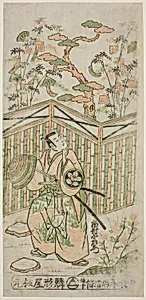
The Actor Ichimura Uzaemon VIII as Oguri Hangan in the play "Mangetsu Oguri Yakata," performed at the Ichimura Theater in the eighth month, 1747
Torii Kiyomasu II, 1747
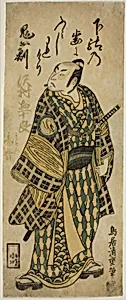
The Actor Sawamura Sojuro II
Torii Kiyoshige, c. 1750
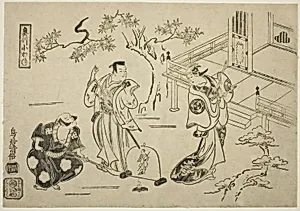
The Actors Ichimura Tamagashiwa I as Iwaki Hime, Murayama Heiemon III as Katsuta Jiro, and Katsuyama Matagoro as Minamoto no Yoshiie in the play "Yoroi Kurabe Oshu Kogane," performed at the Ichimura Theater in the eleventh month, 1716
Torii Kiyomasu I, 1716
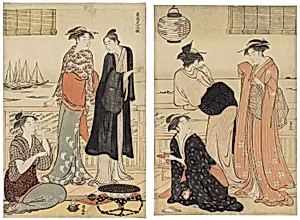
The Sixth Month, Enjoying the Evening Cool in a Teahouse, from the series The Twelve Months in the Southern Quarter (Minami jūni kō)
Torii Kiyonaga, About 1783

Woman with Blue Umbrella Carrying Black Box
Torii Kiyomitsu I, 1760s
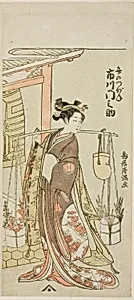
Actor Ichikawa Monnosuke II as the Lady of the Hairpin (Ichikawa Monnosuke Kogai no Tsubone)
Torii Kiyomitsu I, about 1760s
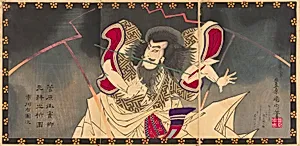
The actor Ichikawa Udanji I as Sugawara no Michizane in the play "Shinrei Sugawara Jikki," performed at the Haruki Theater in the fourth month, 1883
Toyohara Kunichika, 1883
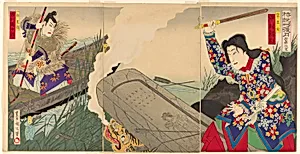
The actors Nakamura Fukusuke IV as Neiojo and Ichikawa Danjuro IX as Hachiro Tametomo
Toyohara Kunichika, 1897
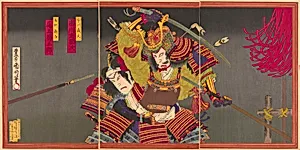
The actors Ichikawa Sadanji I as Imagawa Yoshimoto and Onoe Kikugoro V as Mori Shinsuke
Toyohara Kunichika, 1884
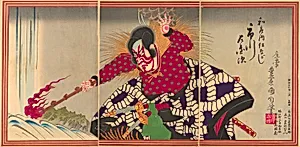
The actor Ichikawa Sadanji I as Watonai
Toyohara Kunichika, 1883
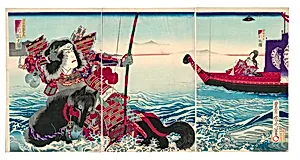
Actors Ichikawa Danjuro IX as Nasu no Yoichi Munetaka and Nakamura Fukusuke IV as Tamamushi Gozen
Toyohara Kunichika, 1885

Young Woman Wearing a Hat
Torii Kiyonaga, c. 1782

Geisha Applying Makeup
Torii Kiyonaga, c. 1781
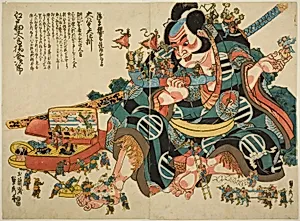
Large wind-up automaton of Asahina Saburo
Utagawa Sadahide, c. 1847/48
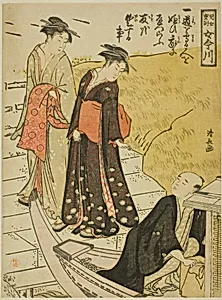
Treasured Admonitions to Young Women (Jijo hokun onna Imagawa)
Torii Kiyonaga, c. 1784
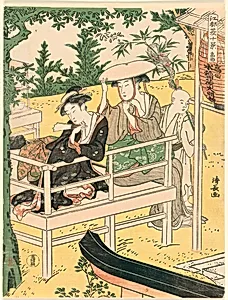
Takata, from the series "Ten Summer Scenes in Edo (Edo natsu jikkei)"
Torii Kiyonaga, c. 1787

Two Women and a Child after a Bath
Torii Kiyonaga, c. 1782
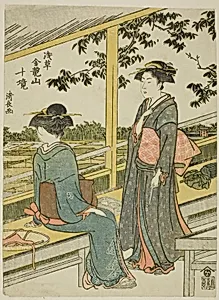
Teahouse overlooking rice fields, from the series "Ten Precincts of Kinryuzan Temple in Asakusa (Asakusa Kinruzan jikkei)"
Torii Kiyonaga, c. 1783
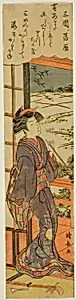
Descending Geese at Mimeguri (Mimeguri no rakugan), from the series "Eight Fashionable Views of Edo (Furyu Edo hakkei)"
Torii Kiyonaga, c. 1778
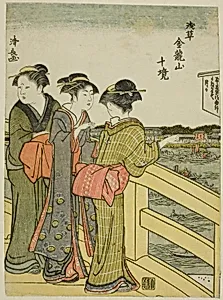
View from Azuma Bridge, from the series "Ten Precincts of Kinryuzan Temple in Asakusa (Asakusa Kinruzan jikkei)"
Torii Kiyonaga, c. 1783
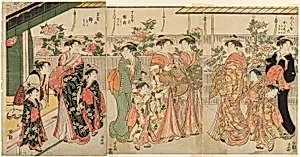
Courtesans of Yoshiwara and their attendants viewing the peonies on Nakanocho
Torii Kiyonaga, c. 1787

Geisha Playing Battledore and Shuttlecock
Torii Kiyonaga, c. 1783
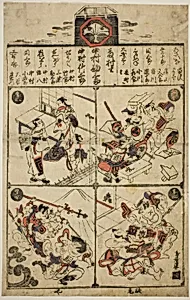
A Playbill for the Ichimura Theater
Torii Kiyomasu I, 1715
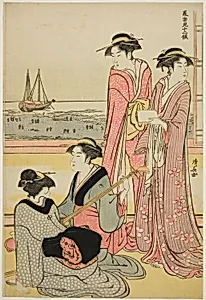
The Fourth Month, from the series "Twelve Months in the South (Minami juni ko)"
Torii Kiyonaga, c. 1784
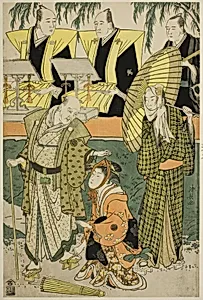
The Actors Bando Matakuro IV as Chubei, Osagawa Tsuneyo II as Umegawa, and Nakamura Katsugoro as Magoemon, in the play "Keisei Koibikyaku," performed at the Morita Theater in the fifth month, 1783
Torii Kiyonaga, 1783
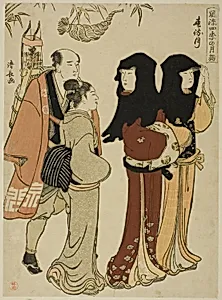
The Twelfth Month (Harumachizuki), from the series "Fashionable Monthly Visits to Sacred Places in the Four Seasons (Furyu shiki no tsuki mode)"
Torii Kiyonaga, c. 1784
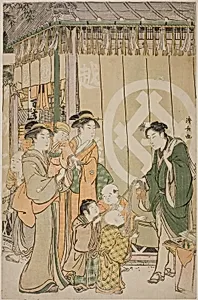
The Echigoya on New Year's Day
Torii Kiyonaga, c. 1789
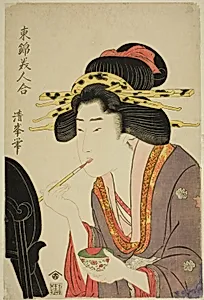
Beauty applying rouge, from the series "Comaprison of Beauties in Eastern Brocade (Azuma nishiki bijin awase)"
Torii Kiyomitsu II (Kiyomine), c. 1804/10
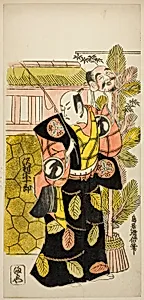
The Actor Sawamura Sojuro I as Ebisu in the play "Suehiro Eho Soga," performed at the Nakamura Theater in the first month, 1729
Torii Kiyomasu II, 1729
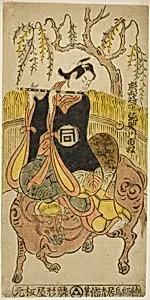
The Actor Sanogawa Ichimatsu I as Kumenosuke in the play "Na no Hana Akebono Soga," performed at the Nakamura Theater in the second month, 1741
Torii Kiyomasu II, 1741
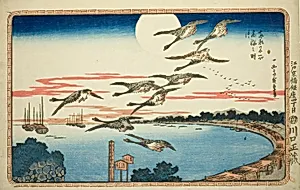
Full Moon at Takanawa (Takanawa no meigetsu), from the series "Famous Views of the Eastern Capital (Toto meisho)"
Utagawa Hiroshige, c. 1831
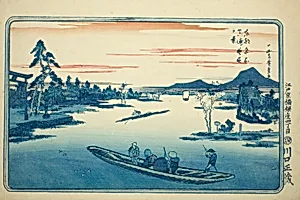
Late Spring at Massaki (Massaki boshun no kei), from the series "Famous Views of the Eastern Capital (Toto meisho)"
Utagawa Hiroshige, c. 1831
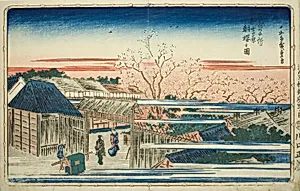
View of Morning Cherry Blossoms in the New Yoshiwara (Shin Yoshiwara asazakura no zu), from the series "Famous Views of the Eastern Capitol (Toto meisho)"
Utagawa Hiroshige, c. 1831
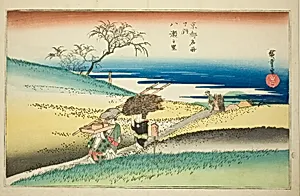
The Village of Yase (Yase no sato) from the series "Famous Places in Kyoto (Kyoto meisho no uchi)"
Utagawa Hiroshige, c. 1834
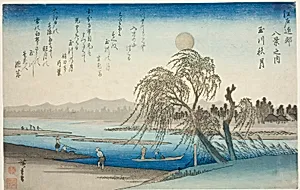
Autumn Moon over Tama River (Tamagawa no shugetsu), from the series "Eight Views in the Environs of Edo (Edo kinko hakkei no uchi)"
Utagawa Hiroshige, c. 1837/38
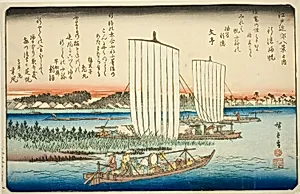
Returning Sails at Gyotoku (Gyotoku no kihan), from the series "Eight Views in the Environs of Edo (Edo kinko hakkei no uchi)"
Utagawa Hiroshige, c. 1837/38
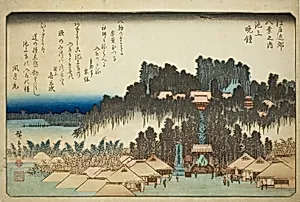
Evening Bell at Ikegami (Ikegami no bansho), from the series "Eight Views in the Environs of Edo (Edo kinko hakkei no uchi)"
Utagawa Hiroshige, c. 1837/38
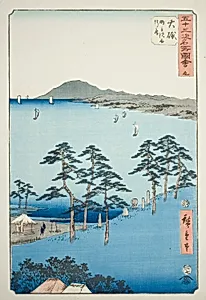
Oiso: Saigyo's Hut at Shigitatsu Marsh (Oiso, Shigitatsusawa Saigyoan), no. 9 from the series "Famous Sight of the Fifty-three Stations (Gojusan tsugi meisho zue)," also known as the Vertical Tokaido
Utagawa Hiroshige, 1855
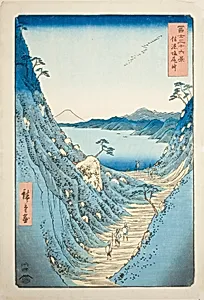
Shiojiri Pass in Shinano Province (Shinano Shiojiri toge), from the series "Thirty-six Views of Mount Fuji (Fuji sanjurokkei)"
Utagawa Hiroshige, 1858
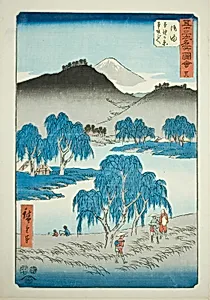
Goyu: Motono Plain and Motosaka Pass (Goyu, Motonogahara Motozaka goe), no. 36 from the series "Famous Sights of the Fifty-three Stations (Gojusan tsugi meisho zue)," also known as the Vertical Tokaido
Utagawa Hiroshige, 1855
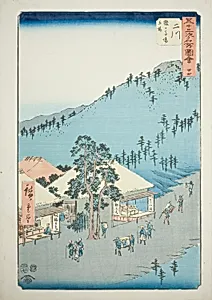
Futakawa: The Station at Surugababa (Futakawa, Sarugababa tateba), no. 34 from the series "Famous Sights of the Fifty-three Stations (Gojusan tsugi meisho zue)," also known as the Vertical Tokaido
Utagawa Hiroshige, 1855
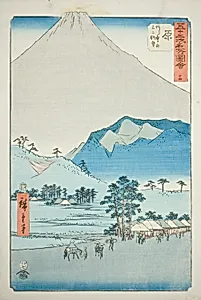
Hara: View of the Ashitaka Mountains and Mount Fuji (Hara, Ashitakayama Fuji chobo), no. 14 from the series "Famous Sights of the Fifty-three Stations (Gojusan tsugi meisho zue)," also known as the Vertical Tokaido
Utagawa Hiroshige, 1855
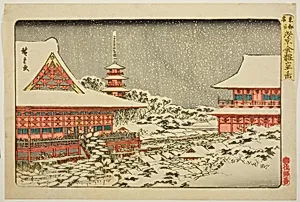
Year-end Fair at Kinryuzan Temple in Asakusa (Asakusa Kinryuzan toshi no ichi), from the series "Famous Places in the Eastern Capital (Toto meisho)"
Utagawa Hiroshige, c. 1835/38
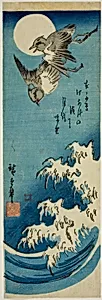
Plovers, full moon, and waves
Utagawa Hiroshige, 1840s