
Arts of Asia — Page 17
9,604 artworks · Art Institute of Chicago
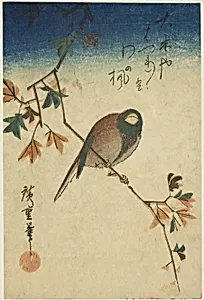
Bird on maple branch
Utagawa Hiroshige, 1830s–1840s
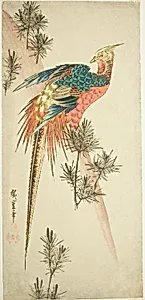
Golden pheasant and pine shoots in snow
Utagawa Hiroshige, c. 1833
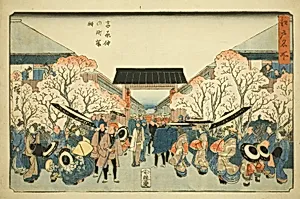
Cherry Blossom Season at Nakanocho in the Yoshiwara (Yoshiwara Nakanocho sakura toki), from the series "Famous Places in Edo (Edo meisho)"
Utagawa Hiroshige, c. 1839/42
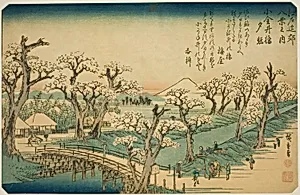
Sunset Glow at Koganei Bridge (Koganei-bashi sekisho), from the series "Eight Views in the Environs of Edo (Edo kinko hakkei no uchi)"
Utagawa Hiroshige, c. 1837/38
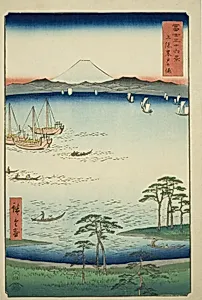
Kurodo Bay in Kazusa Province (Kazusa Kurodo no ura), from the series "Thirty-six Views of Mount Fuji (Fuji sanjurokkei)"
Utagawa Hiroshige, 1858
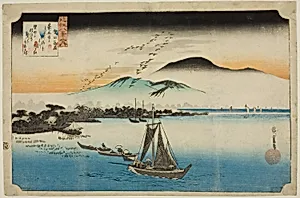
Descending Geese at Katada (Katada rakugan), from the series "Eight Views of Omi (Omi hakkei no uchi)"
Utagawa Hiroshige, c. 1834
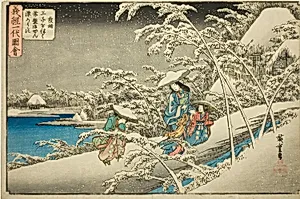
The Beginning: Tokiwa Gozen Fleeing with Her Three Children (Hattan, sanshi o tomonatte Tokiwa Gozen hyorosu), from the series "The Life of Yoshitsune (Yoshitsune ichidai zue)"
Utagawa Hiroshige, c. 1832/34
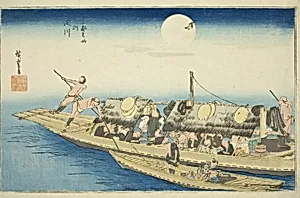
Yodo River (Yodogawa), from the series "Famous Places in Kyoto (Kyoto meisho no uchi)"
Utagawa Hiroshige, c. 1834
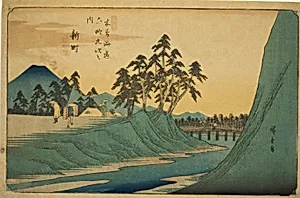
No. 12: Shinmachi, from the series "Sixty-nine Stations of the Kisokaido (Kisokaido rokujukyu tsugi no uchi)"
Utagawa Hiroshige, c. 1835/38
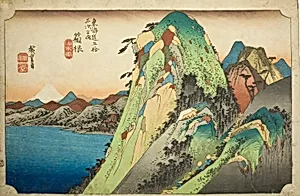
Hakone: View of the Lake (Hakone, kosui no zu), from the series "Fifty-three Stations of the Tokaido Road (Tokaido gojusan tsugi no uchi)," also known as the Hoeido Tokaido
Utagawa Hiroshige, c. 1833/34
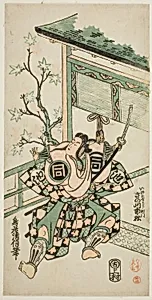
The Actor Sanogawa Ichimatsu I as Ike no Shoji in the play "Mangetsu Oguri Yakata," performed at the Ichimura Theater in the eighth Month, 1747
Torii Kiyonobu II, 1747
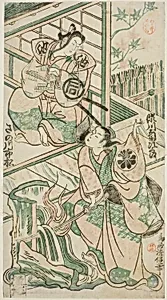
The Actors Sanogawa Ichimatsu I as Ike no Shoji and Segawa Kikujiro I as Hitachi Kohagi in the play "Mangetsu Oguri Yakata," performed at the Ichimura Theater in the eighth month, 1747
Torii Kiyonobu II, 1747
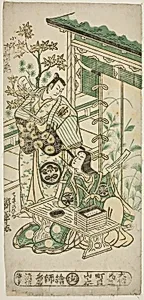
The Actors Ichimura Uzaemon VIII as Oguri Hangan and Segawa Kikunojo I as Terute no Mae in the play "Mangetsu Oguri Yakata," performed at the Ichimura Theater in the eighth month, 1747
Torii Kiyonobu II, 1747
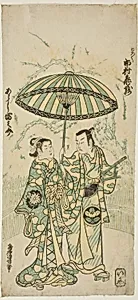
The Actors Ichimura Kamezo I as Kanto Koroku and Arashi Tominosuke I as Hayasaki in the play "Hokazo Yunzei Hachinoki," performed at the Ichimura Theater in the eleventh month, 1748
Torii Kiyonobu II, 1748
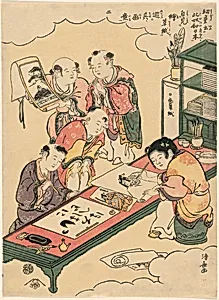
No. 2: Chinese boys copying paintings and writing Japanese, from the series "Children Say 'This is Japan!' and Imitate the Games They See in Picturebooks (Yodo iu koitsu wa Nippon, ezoshi o mite yori sono gai ni asobu)"
Torii Kiyonaga, c. 1791
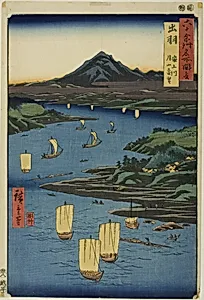
Dewa Province: Mogami River and a Distant View of Mount Gassan (Dewa, Mogamigawa, Gassan enbo), from the series "Famous Places in the Sixty-odd Provinces (Rokujuyoshu meisho zue)"
Utagawa Hiroshige, 1853
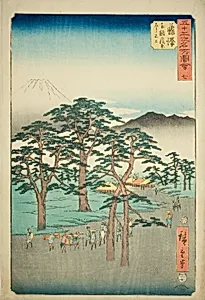
Fujisawa: Mount Fuji on the Left from the Nanki Pine Grove (Fujisawa, Nanki no Matsubara hidari no Fuji), no. 7 from the series "Famous Sights of the Fifty-three Stations (Gojusan tsugi meisho zue)," also known as the Vertical Tokaido
Utagawa Hiroshige, 1855
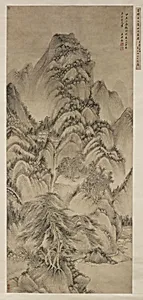
Landscape after Wang Meng
Wang Shimin, Qing dynasty (1644–1911), 1664
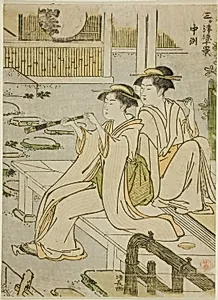
Nakasu, from the series "Ten Scenes of Enjoying the Cool in the Three Cities (Sangatsu ryo jikkei)"
Torii Kiyonaga, c. 1785/86
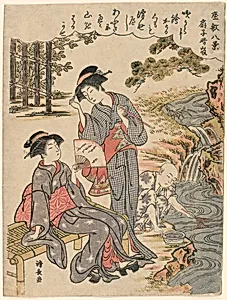
A Fan Suggesting a Dispersed Storm (Sensu no seiran) from the series "Eight Scenes of the Parlor (Zashiki hakkei)"
Torii Kiyonaga, c. 1777
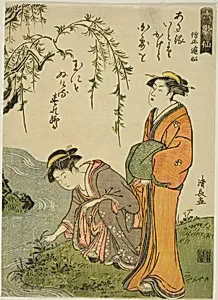
The Poet Sojo Henjo, from the series "Six Immortal Poets (Rokkasen)"
Torii Kiyonaga, c. 1785
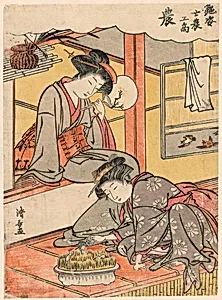
The Farmer (No) from the series Beauties Illustrating the Four Social Classes (Adesugata shi no ko sho)
Torii Kiyonaga, c. 1779
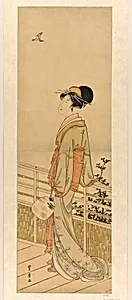
Listening to the cuckoo's cry
Utagawa Toyohiro, n.d.
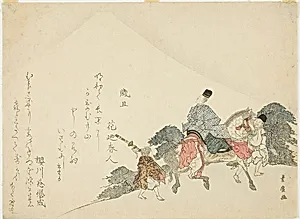
Gazing at Mt. Fuji on the Horse
Utagawa Toyohiro, 19th century
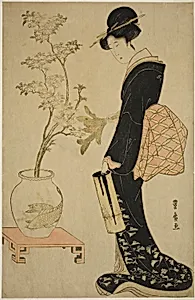
Viewing Ikebana
Utagawa Toyohiro, c.1802
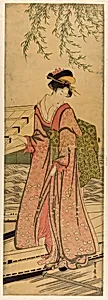
Young woman stepping out of a boat
Utagawa Toyohiro, n.d.
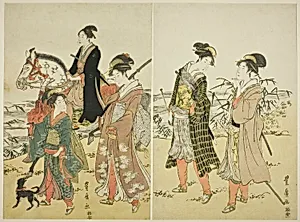
Party of falconers near river
Utagawa Toyohiro, c. 1798/1801
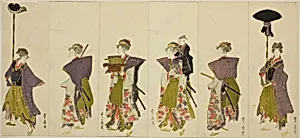
Parody of a daimyo procession
Utagawa Toyohiro, c. 1805/07
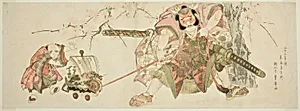
The Festive Custom of Asahina Continued by Jihinari for Twenty-three years (Nijusan-nen tsuzuki Jihinari kichirei Asahina)
Utagawa Toyohiro, 1820
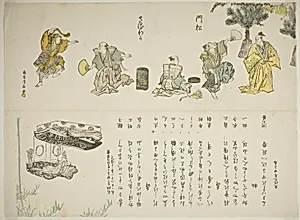
The Saruwaka Dance
Torii Kiyonaga, 1804
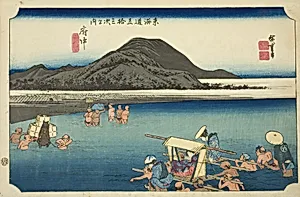
Fuchu: The Abe River (Fuchu, Abekawa), from the series "Fifty-three Stations of the Tokaido Road (Tokaido gojusan tsugi no uchi)," also known as the Hoeido Tokaido
Utagawa Hiroshige, c. 1833/34
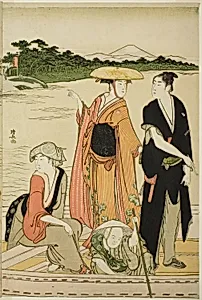
Ferry on the Rokugo River
Torii Kiyonaga, c. 1784
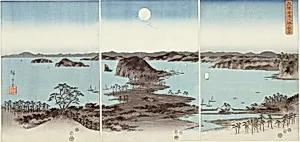
Evening View of Eight Famous Sites at Kanazawa (Buyo Kanazawa hassho yakei)
Utagawa Hiroshige, 1857
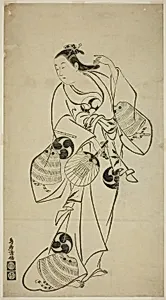
Actor as a Standing Beauty
Torii Kiyomasu I, About 1715
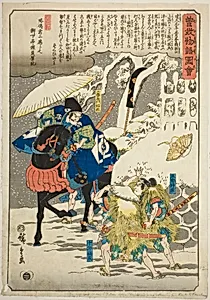
Soga no Juro and Soga no Goro ambushing Suketsune, from the series "Illustrated Tale of the Soga Brothers (Soga monogatari zue)"
Utagawa Hiroshige, c. 1843/47
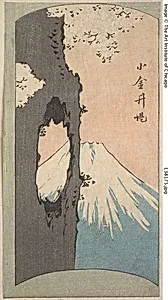
Koganei, section of a sheet from the series "Cutout Pictures of Famous Places in Edo (Edo meisho harimaze zue)"
Utagawa Hiroshige, 1857
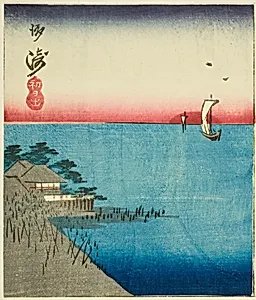
Morning Market at Nihon Bridge (Nihonbashi, asaichi), section of a sheet from the series "Cutouts of Famous Places in Edo (Harimaze Koto meisho)"
Utagawa Hiroshige, 1852
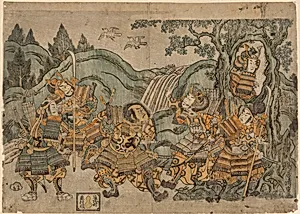
Minamoto no Yoritomo Hiding in a Tree
Torii Kiyoshige, c. 1758
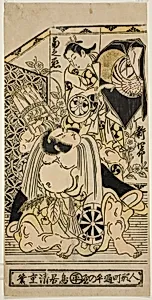
The Actors Anegawa Shinshiro I and Segawa Kikunojo I
Torii Kiyoshige, c. 1733
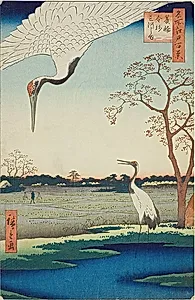
Minowa, Kanasugi, Mikawashima, No.102 from the series “One Hundred Famous Views of Edo (Meisho Edo hyakkei)”
Utagawa Hiroshige, 1857
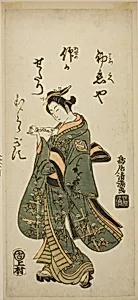
The Actor Nakamura Matsue as Oshichi in the play "Fujibumi Sakae Soga," performed at the Ichimura Theater in the second month, 1763
Torii Kiyomitsu I, 1763
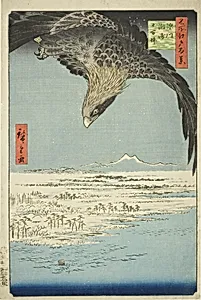
Fukagawa Susaki and Jumantsubo (Fukagawa Susaki Jumantsubo), from the series "One Hundred Famous Views of Edo (Meisho Edo hyakkei)"
Utagawa Hiroshige, 1857
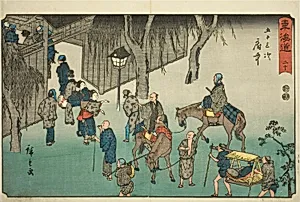
Fuchu—No. 20, from the series "Fifty-three Stations of the Tokaido (Tokaido gojusan tsugi)," also known as the Reisho Tokaido
Utagawa Hiroshige, c. 1847/52
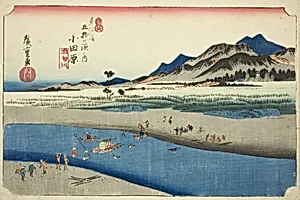
Odawara: The Sakawa River (Odawara, Sakawagawa), from the series "Fifty-three Stations of the Tokaido Road (Tokaido gojusan tsugi no uchi)," also known as the Hoeido Tokaido
Utagawa Hiroshige, c. 1833/34
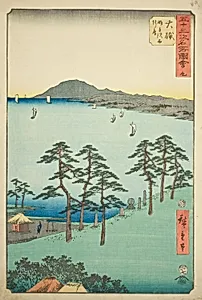
Oiso: Saigyo's Hut at Shigitatsu Marsh (Oiso, Shigitatsusawa Saigyoan), no. 9 from the series "Famous Sight of the Fifty-three Stations (Gojusan tsugi meisho zue)," also known as the Vertical Tokaido
Utagawa Hiroshige, 1855
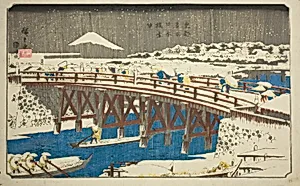
Nihon Bridge in Snow (Nihonbashi setchu), from the series "Famous Places in the Eastern Capital (Toto meisho)"
Utagawa Hiroshige, c. 1842/44
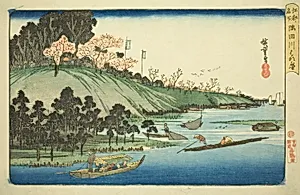
Cherry Blossoms in Full Bloom along the Sumida River (Sumidagawa hanazakari), from the series "Famous Places in Edo (Koto meisho)"
Utagawa Hiroshige, c. 1832/34
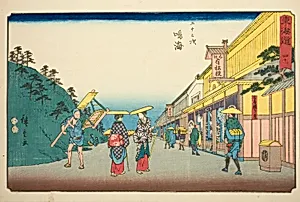
Narumi: Shops Selling the Famous Tie-dyed Fabric (Narumi, meisan shibori mise)—No. 41, from the series "Fifty-three Stations of the Tokaido (Tokaido gojusan tsugi)," also known as the Reisho Tokaido
Utagawa Hiroshige, c. 1847/52