
Renaissance
The Renaissance marked a cultural rebirth that transformed European art. Artists rediscovered classical learning, developed linear perspective, and achieved unprecedented naturalism. This period produced some of history's greatest masterpieces and established principles that shaped Western art for centuries.
Historical Context
Beginning in Florence and spreading throughout Europe, the Renaissance saw the revival of classical scholarship, humanist philosophy, and scientific inquiry. Wealthy patrons like the Medici family supported artists, while the printing press disseminated ideas across the continent.
Key Characteristics
- Development of linear perspective and spatial depth
- Emphasis on anatomical accuracy and naturalism
- Revival of classical themes and mythology
- Use of sfumato and chiaroscuro techniques
- Integration of humanist philosophy and religious themes
Related Art Movements
Explore Renaissance Artworks
10,000 artworks from 1400-1600 available in our collection
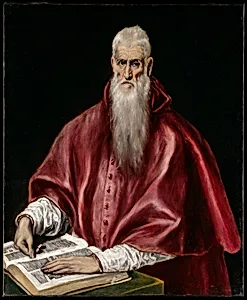
Saint Jerome as Scholar
El Greco (Domenikos Theotokopoulos)
ca. 1610
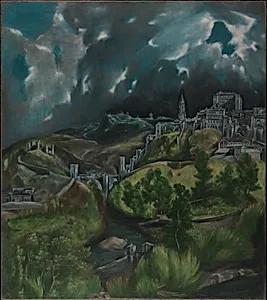
View of Toledo
El Greco (Domenikos Theotokopoulos)
ca. 1599–1600
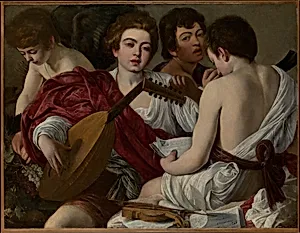
The Musicians
Caravaggio (Michelangelo Merisi)
1597
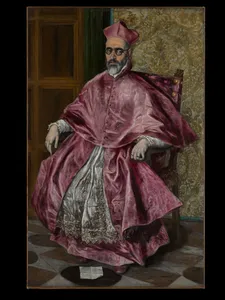
Cardinal Fernando Niño de Guevara (1541–1609)
El Greco (Domenikos Theotokopoulos)
ca. 1600
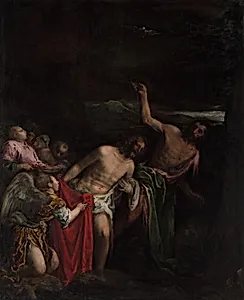
The Baptism of Christ
Jacopo Bassano (Jacopo da Ponte)
ca. 1590
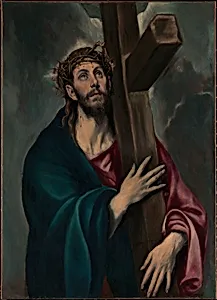
Christ Carrying the Cross
El Greco (Domenikos Theotokopoulos)
ca. 1577–87
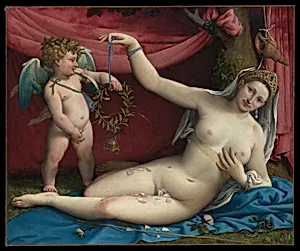
Venus and Cupid
Lorenzo Lotto
1520s
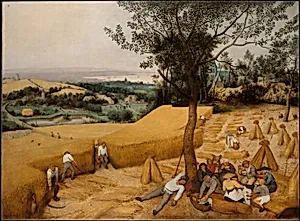
The Harvesters
Pieter Bruegel the Elder
1565
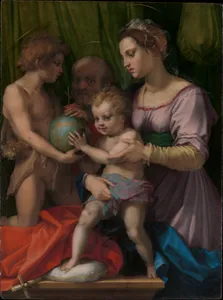
The Holy Family with the Young Saint John the Baptist
Andrea del Sarto (Andrea d'Agnolo)
ca. 1528
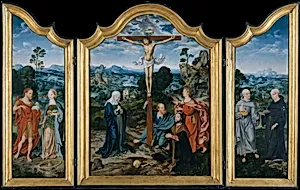
The Crucifixion with Saints and a Donor
Joos van Cleve
ca. 1520
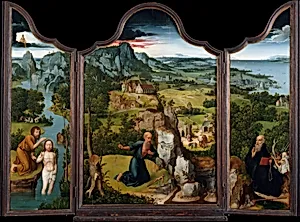
The Penitence of Saint Jerome
Joachim Patinir
ca. 1512–15
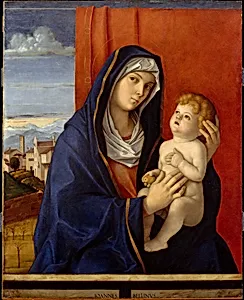
Madonna and Child
Giovanni Bellini
late 1480s

Portrait of a Carthusian
Petrus Christus
1446
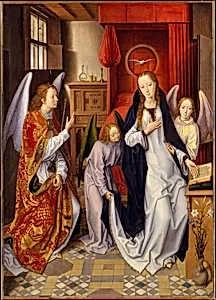
The Annunciation
Hans Memling
1480–89
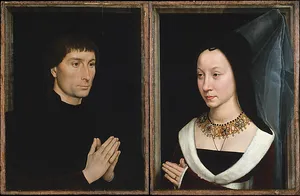
Tommaso di Folco Portinari (1428–1501); Maria Portinari (Maria Maddalena Baroncelli, born 1456)
Hans Memling
ca. 1470

The Coronation of the Virgin
Annibale Carracci
after 1595
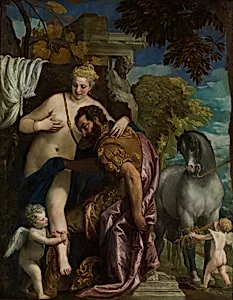
Mars and Venus United by Love
Paolo Veronese (Paolo Caliari)
1570s
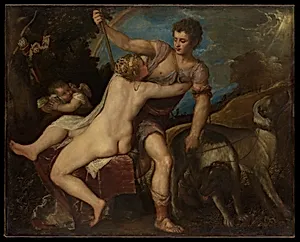
Venus and Adonis
Titian (Tiziano Vecellio)
1550s
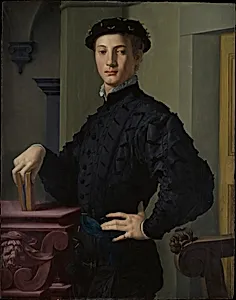
Portrait of a Young Man
Bronzino (Agnolo di Cosimo di Mariano)
1530s
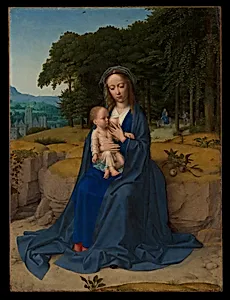
The Rest on the Flight into Egypt
Gerard David
ca. 1512–15
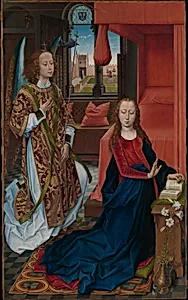
The Annunciation
Hans Memling
ca. 1465–70
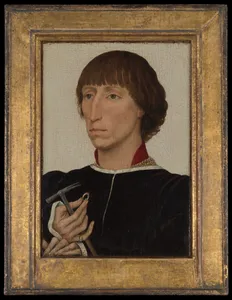
Francesco d'Este (born about 1429, died after July 20, 1486)
Rogier van der Weyden
ca. 1460
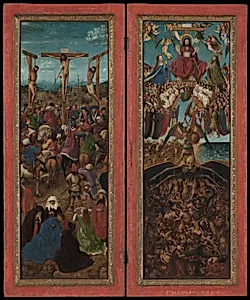
The Crucifixion; The Last Judgment
Jan van Eyck
ca. 1440–41
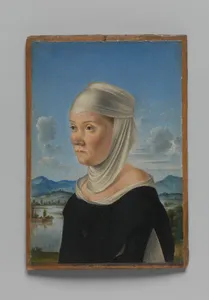
Portrait of a Woman, Possibly a Nun of San Secondo; (verso) Scene in Grisaille
Jacometto (Jacometto Veneziano)
ca. 1485–95
Explore Other Periods
Ancient Egypt
3000 BCE - 30 BCE
Ancient Egyptian art spans over three millennia, representing one of humanity's longest continuous artistic traditions. From the pyramids of Giza to the treasures of Tutankhamun's tomb, Egyptian artists created works of extraordinary beauty and symbolic power that served religious, funerary, and political purposes.
Greek & Roman
800 BCE - 476 CE
Classical antiquity produced the artistic ideals that shaped Western civilization. Greek artists pioneered naturalistic human representation, while Romans excelled in portraiture, engineering, and monumental architecture. Together, they established standards of beauty, proportion, and artistic excellence that artists would return to for millennia.
Medieval
500-1400
Medieval art encompasses nearly a thousand years of artistic production, from the fall of Rome to the dawn of the Renaissance. This period saw the development of Byzantine mosaics, Romanesque monasteries, Gothic cathedrals, and illuminated manuscripts—all serving primarily religious purposes with a focus on spiritual rather than naturalistic representation.