
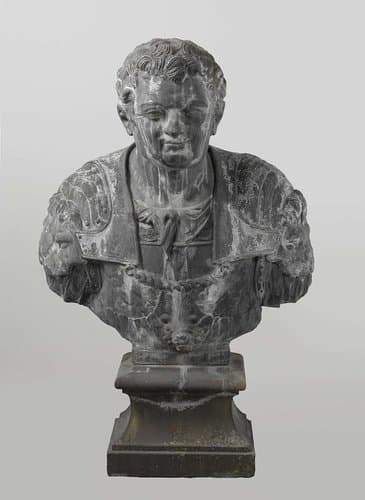
Bust of Emperor Marcus Salvius Otho (32-69)
after 1674
Medium
lead
Dimensions
89; 28; 121; 175; 43
Rights
Public Domain
About this artwork
borstbeeld: hoogte 89 cm x gewicht 175 kg
Art Historical Context
Behold the striking *Bust of Emperor Marcusvius Otho (32-69)*, crafted by the skilled 17th-century sculptor Barthus Eggers after 1674. Standing at 89 cm tall, a width of 43 cm and of 28 cm, this imposing lead portrait weighs a hefty 175 kg, underscoring its monumental presence. Eggers, a master of metalwork active in the Baroque era, drew inspiration from ancient Roman portraiture, reviving the emperor's likeness in a medium more commonly associated with plumbing or roofing than fine art. Otho, a pivotal figure in Roman history, briefly reigned as emperor in AD 69 during the chaotic "Year of the Four Emperors," succeeding Nero amid civil war before his dramatic suicide after defeat at Bedriacum. Created over 1,600 years later, Eggers' bust reflects the 17th-century fascination with classical antiquity, when artists across Europe emulated Roman busts to evoke imperial grandeur and virtue. Lead's malleability allowed for detailed modeling of Otho's stern features, curly hair, and draped toga, capturing the gravitas of imperial portraiture. This rare lead example highlights innovative material choices—durable yet affordable for large-scale works—possibly intended for a collector's cabinet or garden display. Its substantial weight speaks to lead's density, making it a tactile marvel that invites visitors to ponder the bridge between ancient power and Baroque revival.
About the Artist
Bartholomeus Eggers · 1630–1692
Bartholomeus Eggers (c. 1637–1692) was a Flemish sculptor who spent the majority of his career in the Dutch Republic, contributing significantly to Amsterdam's monumental sculptural decoration during its Golden Age. Born in Antwerp, Eggers left his native city between 1650 and 1654 to participate in one of the seventeenth century's most ambitious sculptural projects: the decoration of Amsterdam's ...