
Court Hat and Court Dress
19th century
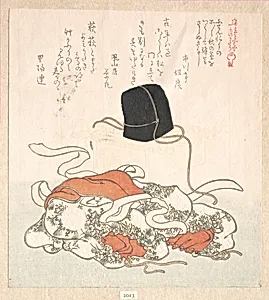
Medium
Woodblock print (surimono); ink and color on paper
Dimensions
7 15/16 x 7 1/4 in. (20.2 x 18.4 cm)
Classification
Prints
Culture & Period
Japan · Edo period (1615–1868)
Department
Asian Art
Museum
Metropolitan Museum of Art, New York, NY
Credit
H. O. Havemeyer Collection, Bequest of Mrs. H. O. Havemeyer, 1929
Accession Number
JP2013
Rights
Public Domain
Tags
Art Historical Context
Step into the refined world of Edo-period Japan (1615–1868) with *Court Hat and Court Dress a delicate woodblock print (surono) by Kuboman, a master of ukiyo-e known for his poetic and intricate designs. Created in the 19th century, this work measures just 7 15/16 x 7 1/4 inches, showcasing Shunman's skill in capturing the opulent textures of formal attire through ink and vibrant color on paper. Surimono, unlike mass-produced ukiyo-e, were commissioned prints often for New Year's greetings or celebrations, featuring luxurious techniques like embossing and metallic pigments for a tactile, jewel-like quality. The print highlights the splendor of Japanese court fashion, with its elaborate hat (possibly a *kanmuri* or ceremonial headpiece) and layered dress evoking the hierarchical elegance of samurai and noble society. During the Edo era, such garments symbolized status and ritual, blending silk brocades with precise folds that Shunman renders with astonishing realism and subtle patterning. This piece reflects the period's fascination with beauty (*bijin-ga*) and fashion, bridging art and everyday luxury. Generously bequeathed to the Metropolitan Museum of Art in 1929 as part of the H. O. Havemeyer Collection, this surimono invites visitors to appreciate the cultural poise of feudal Japan, where every fold tells a story of tradition and artistry.
About the Artist
Kubo Shunman · 1757–1820
Japanese, 1757–1820