
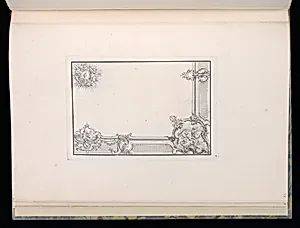
Design for Ceiling Ornament
Classification
Bound print
Department
Smithsonian Collection
Museum
Smithsonian American Art Museum
Credit
Purchased for the Museum by the Advisory Council
Accession Number
1921-6-282-79
Rights
Public Domain
About this artwork
Research in Progress
Art Historical Context
François de Cuvilli the Elder (1695–1768), a Belgian-born architect and designer who made his mark in Germany, was a master of the opulent Rococo style. Active primarily in Bavaria, he served as court architect to the Elector of Munich, creating lavish interiors for palaces like Amalienburg and Nymphenburg. This *Design for Ceiling Ornament dated between 1731 1768, exemplifies flair for intricate decorative schemes likely intended for the grand halls of 18th-century European aristocracy. As a bound print—probably an engraving from a design portfolio—this artwork served as a blueprint for artisans, disseminating Cuvilliés's visions across workshops. Rococo ceiling designs like this one featured scrolling motifs, asymmetrical flourishes, and playful illusions of depth, transforming flat surfaces into dynamic, light-filled fantasies. They reflected the era's shift from heavy Baroque grandeur to lighter, more intimate elegance, blending architecture with sculpture and painting. Housed in the Smithsonian American Art Museum's collection, purchased by the Advisory Council, this piece offers a glimpse into the sophisticated world of ornamental printmaking. Though research continues, it highlights how such designs fueled the cultural splendor of the Enlightenment courts, inviting us to imagine gilded ceilings alive with movement and whimsy.