
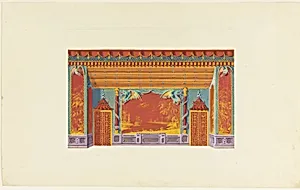
Design for the South Wall of the Music Room, Royal Pavilion, Brighton
Classification
interiors
Department
Smithsonian Collection
Museum
Smithsonian American Art Museum
Credit
Museum purchase through gift of Mrs. John Innes Kane
Accession Number
1948-40-8
Rights
Public Domain
About this artwork
Research in Progress
Art Historical Context
Frederick Crace (1779–1859), a prominent English interior decorator from a renowned family of designers, created this design around 1817 for the south wall of the Music Room the Royal Pavilion at Brighton. The Pavilion, originally a modest farmhouse, was extravagantly transformed by George IV—then Prince Regent—into a fantastical palace blending Regency elegance with exotic Chinoiser influences. Crace's work contributed to the interiors' lavish opulence, featuring intricate patterns, gilded motifs, and oriental-inspired elements that evoked distant empires. As a preparatory design classified under interiors, this piece exemplifies the meticulous planning behind the Pavilion's rooms, which were among the most sumptuous of their era. The Music Room, with its domed ceiling and bamboo-scrolled walls, became a jewel of British decorative arts, symbolizing the Regency taste for escapism and grandeur amid post-Napoleonic prosperity. Crace's collaboration with architect John Nash helped realize these visions, influencing later Victorian interiors. Today, housed in the Smithsonian American Art Museum through a generous purchase enabled by Mrs. John Innes Kane's gift, this artwork offers a glimpse into royal patronage and the artistry of 19th-century design. Though research continues, it stands as a testament to Crace's skill in harmonizing fantasy with fine craftsmanship.