
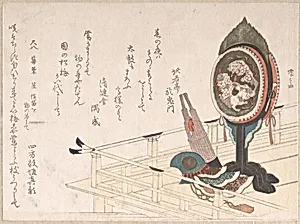
Drum with Stand, Sho (A Kind of Mouth Organ) and Helmet on the Stage for Bugaku Dance
Medium
Woodblock print (surimono); ink and color on paper
Dimensions
5 3/8 x 7 1/4 in. (13.7 x 18.4 cm)
Classification
Prints
Culture & Period
Japan · Edo period (1615–1868)
Department
Asian Art
Museum
Metropolitan Museum of Art, New York, NY
Credit
H. O. Havemeyer Collection, Bequest of Mrs. H. O. Havemeyer, 1929
Accession Number
JP2188
Rights
Public Domain
Tags
Art Historical Context
This delicate woodblock print, titledDrum with Stand, (A Kind of Mouth) and Helmet on the for Bugaku Dance*, created by Ryūrykyo Shinsai Japan's Edo period (16151868). Shinsai, a master of surimono—luxurious, privately commissioned prints often produced for poetry gatherings or celebrations—captures the elegant stage props essential to Bugaku, a refined court dance performed at imperial ceremonies. The intimate dimensions (5 3/8 x 7 1/4 in.) reflect surimono's bespoke nature, with vibrant inks and colors on paper evoking the theatrical splendor of traditional Japanese performance arts. Bugaku, imported from China and Korea in the 8th century and adapted into Japan's gagaku orchestra tradition, features musicians and dancers in elaborate costumes, including ornate helmets like the one depicted here alongside the drum stand and sho mouth organ. These instruments provide the rhythmic and melodic foundation for the slow, majestic movements symbolizing harmony and imperial grace. Shinsai's precise composition highlights the cultural reverence for such rituals, blending ukiyo-e finesse with poetic subtlety. Part of the Metropolitan Museum of Art's H. O. Havemeyer Collection, this print offers a window into Edo-era artistry, where everyday viewers could own museum-quality works celebrating Japan's timeless performing arts heritage.
About the Artist
Ryūryūkyo Shinsai · 1799–1823
Ryūryūkyo Shinsai (柳々居辰斎), active from 1799 to 1823, was a prominent Japanese ukiyo-e printmaker based in Edo (modern Tokyo), renowned for his mastery of surimono—luxurious, privately commissioned woodblock prints produced for elite poetry circles and New Year's celebrations. He began his training under Tawaraya Sōri before becoming a student of the legendary Katsushika Hokusai, from whom he recei...