
Eight Views of the Xiao and Xiang Rivers
Late 17th–early 18th century
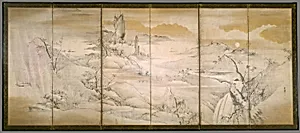
Medium
Pair of six-fold screens; ink, colors, and gold paint on paper
Dimensions
170.2 × 381 cm (67 1/16 × 150 in.)
Classification
screen
Department
Arts of Asia
Museum
Art Institute of Chicago
Accession Number
29759
Rights
Public Domain
Art Historical Context
Behold the majestic *Eight Views of the Xiao and Rivers*, a pair of six-fold screens crafted the Japanese artist Sekkei in the 17th to early 18th century These exquisite byōbu (folding screens), measuring an impressive 170.2 381 cm, unfold like panoramic scrolls, capturing the poetic beauty of China's Xiao and Xiang rivers—a timeless motif in East Asian art. Rendered in ink, vibrant colors, and shimmering gold paint on paper, they evoke misty mountains, serene waters, and fleeting seasonal moments, hallmarks of literati-inspired landscapes. This theme, originating in Song dynasty China, gained profound popularity in Edo-period Japan, symbolizing melancholy, harmony with nature, and the impermanence of life, as evoked in classical poems by figures like Du Fu. Sekkei's masterful use of gold flecks creates a luminous ground, mimicking shimmering water or twilight skies, a technique prized in Japanese screen painting for its room-transforming opulence. Such screens were cherished in elite homes and tea rooms, serving as both decor and meditative focal points. Today, at the Art Institute of Chicago's Arts of Asia department, these screens transport visitors to a world of refined elegance, exemplifying the fusion of Chinese poetic tradition with Japanese artistic innovation during a golden age of cultural exchange.