
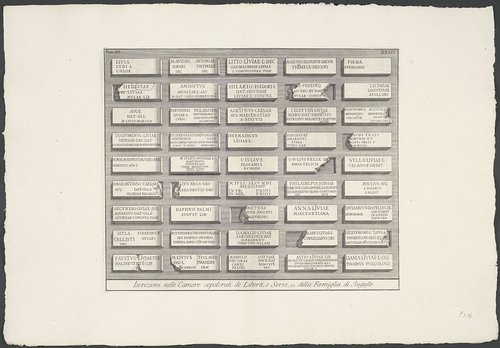
Inscripties uit de graftombe van de vrijgelatenen en slaven van de familie van Augustus
ca. 1756 - ca. 1757
Medium
etching
Dimensions
482; 400
Rights
Public Domain
About this artwork
verzamelaarsmerk, verso, gestempeld: Lugt 2228
Art Historical Context
Step into the shadowy grandeur of ancient Rome with Giovanni Battista Piranesi's etching *Inscripties uit deombe van de vrijgelen en slaven van familie van Augustus* (ca. 1756–1757). This impressive 400 × 482 mm work captures detailed inscriptions from the tomb of freed slaves and servants of Emperor Augustus' family, a remnant of Rome's imperial household. Piranesi, the visionary 18th-century Venetian artist famed for his *Vedute di Roma* series, meticulously documented such antiquities, blending archaeological precision with dramatic flair. As a master etcher, Piranesi employed intricate techniques—deep bites into copper plates and rich cross-hatching—to evoke the weathered textures of stone and the mystery of faded Latin script. His Romantic style amplified the sublime decay of ancient monuments, turning historical fragments into timeless evocations of Rome's lost glory. This piece likely hails from his extensive catalogs of Roman ruins, preserving epigraphic evidence that illuminates the lives of everyday figures in the Julio-Claudian era. Bearing a collector's mark (Lugt 2228) on the verso, this etching not only showcases Piranesi's technical genius but also underscores the cultural obsession with classical revival during the Enlightenment. It's a window into social history, reminding us that even slaves and freedmen left enduring marks on eternity.
About the Artist
Giovanni Battista Piranesi · 1720–1778
Giovanni Battista Piranesi (1720–1778) was an Italian printmaker, architect, and antiquarian whose visionary etchings of Rome and imaginary prisons revolutionized architectural representation and profoundly influenced both Neoclassicism and Romanticism. Piranesi stands as one of the most important printmakers of the eighteenth century, fundamentally shaping European perceptions of ancient Rome an...