
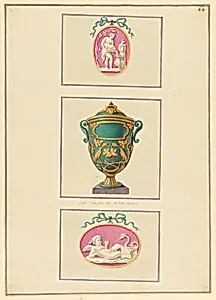
Ornament Design with Burial Urn and Cameos
Medium
Drawing
Classification
Drawing
Department
Smithsonian Collection
Museum
Smithsonian American Art Museum
Credit
Gift of Unknown Donor
Accession Number
1980-32-1454
Rights
Public Domain
About this artwork
Research in Progress
Art Historical Context
In the late 18th century, artist Michel Angelo Pergoles, active from around 1760 to 1801, crafted intricate ornamental designs that bridged classical antiquity with emerging neoclassical tastes. His 1776 *Ornament Design with Burial Urn and Cameos*, a delicate drawing now in the Smithsonian American Art's collection (gift of an unknown donor), exemplifies this fusion. Created during a period of fervent revival of ancient Roman and Greek motifs across Europe, Pergolesi's work often served as templates for architects, furniture makers, and engravers, influencing elegant interiors in grand estates. The design features a burial urn—a poignant symbol of commemoration rooted in classical funerary art—flanked by cameos, those finely carved gem portraits popularized in jewelry and decorative arts. As a drawing, it highlights Pergolesi's mastery of line and composition, likely intended for reproduction in pattern books that disseminated neoclassical ornamentation. This piece reflects the era's fascination with archaeological discoveries, like those at Pompeii and Herculaneum, which inspired a refined aesthetic blending mourning symbolism with ornamental beauty. Though research on this specific work continues, it offers a window into how 18th-century designers like Pergolesi, who worked extensively in England, elevated everyday decoration into sophisticated homage to the past—inviting us to appreciate the enduring allure of classical elegance.