
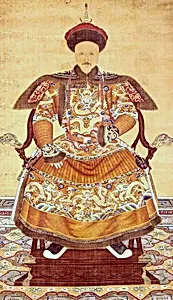
Portrait of Yongzheng Emperor (1723–1735)
19th century
Medium
Hanging scroll; ink and color on silk
Dimensions
Image: 71 1/2 × 41 5/8 in. (181.6 × 105.7 cm) Overall with mounting: 102 1/4 x 47 5/8 in. (259.7 x 121 cm) Overall with knobs: 8 ft. 6 1/4 in. × 51 3/8 in. (259.7 × 130.5 cm)
Classification
Paintings
Culture & Period
China · Qing dynasty (1644–1911)
Department
Asian Art
Museum
Metropolitan Museum of Art, New York, NY
Credit
Rogers Fund, 1942
Accession Number
42.141.3
Rights
Public Domain
Tags
Art Historical Context
This majestic hanging scroll portrays the Yongzheng Emperor (. 1723–1735), the fifth emperor of China's Qing dynasty (16441911), rendered by an unidentified artist in the 19th century. over seven feet tall when unrolled, the portrait exemplifies traditional Chinese imperial portraiture, for ceremonial display in palaces or temples. Such works were not mere likenesses but symbols of imperial authority, often used in ancestor worship and state rituals to honor the emperor's legacy long after his death. Crafted in ink and color on silk—a luxurious medium prized for its luminous texture and durability—the painting employs meticulous brushwork to capture the emperor's dignified posture, elaborate robes, and stern gaze. Qing court artists favored this hanging scroll format, which allowed the artwork to be unveiled dramatically for special occasions, enhancing its aura of reverence. Though created posthumously, it reflects the era's emphasis on Confucian ideals of rulership, blending realism with stylized hierarchy to elevate the sovereign above mortals. Housed in the Metropolitan Museum of Art's Asian Art Department (Rogers Fund, 1942), this portrait offers visitors a window into Qing imperial splendor, where art served both aesthetic and political ends.