
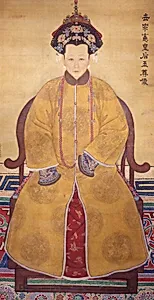
Portrait of Yongzheng Empress (1723–1735)
19th century
Medium
Hanging scroll; ink and color on silk
Dimensions
Image: 85 3/4 × 37 5/8 in. (217.8 × 95.6 cm) Overall with mounting: 85 3/4 x 37 5/8 in. (217.8 x 95.6 cm) Overall with knobs: 85 3/4 × 41 1/2 in. (217.8 × 105.4 cm)
Classification
Paintings
Culture & Period
China · Qing dynasty (1644–1911)
Department
Asian Art
Museum
Metropolitan Museum of Art, New York, NY
Credit
Rogers Fund, 1942
Accession Number
42.141.4
Rights
Public Domain
Tags
Art Historical Context
This exquisite hanging scroll portrays an empress from the reign of the Yongzheng Emperor (r. 1723–1735), a pivotal figure in China's Qing dynasty (16441911). Created by an unidentified artist in the 19th century, the work captures her regal poise in ink and color on silk, a traditional medium prized for its luminous sheen and ability to convey imperial splendor. Measuring over seven feet tall, this monumental format was designed for ceremonial display, unrolled in palaces or ancestral halls to honor the subject's enduring legacy. Qing imperial portraits like this one served vital cultural and political roles, reinforcing the Manchu court's hierarchy and divine mandate. Women in such depictions, though rare, symbolized familial piety and dynastic continuity, often shown in elaborate robes embroidered with dragons and phoenixes denoting their exalted status. The meticulous brushwork—fine lines for facial features, vibrant mineral pigments for textiles—exemplifies anonymous court workshop traditions, prioritizing realism and decorum over individual artistry. Acquired through the Rogers Fund in 1942, this painting now graces the Metropolitan Museum of Art's Asian Art collection, offering visitors a window into the opulent world of Qing empresses and the artistry that immortalized them.