
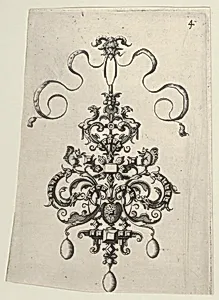
Reverse Copy of Design for a Pendant, from Ars His Myronis Nobilis Effingitus Pagellulis
ca. 1600
Medium
Engraving
Dimensions
Sheet: 5 1/2 × 3 5/8 in. (13.9 × 9.2 cm)
Classification
Prints|Ornament & Architecture
Department
Drawings and Prints
Museum
Metropolitan Museum of Art, New York, NY
Credit
Harris Brisbane Dick Fund, 1923
Accession Number
23.88.3
Rights
Public Domain
Tags
Art Historical Context
This delicate engraving by Paul Birenhultz, created around1600, offers a fascinating glimpse the world of Renaissance jewelry. Titled a reverse copy of a pendant design, the small print—measuring just 5½ by 3⅝ inches—showcases ornamental motifs, including lively squirrels, intended as inspiration for goldsmiths and jewelers. As part of the series *Ars His Myronis Nobilis Effingitus Pagellulis*, it belongs to the Metropolitan’s collection of prints and drawings focused on ornament and architecture. Engravings like this played a vital role in disseminating artistic ideas across Europe during the early modern period. By circulating detailed designs through print, artists such as Birckenhultz enabled craftsmen to replicate elaborate jewelry patterns without needing direct access to original drawings. The “reverse copy” technique suggests practical use, perhaps for transferring the image onto metal or other materials. Today, the work highlights how even functional design prints carried artistic merit, blending natural motifs with decorative elegance. Its presence in the museum’s holdings, acquired through the Harris Brisbane Dick Fund, underscores the enduring appeal of these intimate works that bridged art, craft, and daily adornment.