
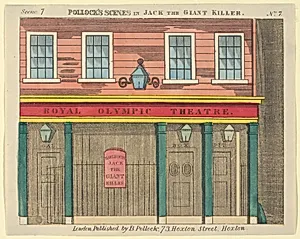
Scene 7, from Jack and the Giant Killer, Scenes for a Toy Theater
1870–90
Medium
Lithograph
Dimensions
Sheet: 6 11/16 × 8 7/16 in. (17 × 21.4 cm)
Classification
Prints
Department
Drawings and Prints
Museum
Metropolitan Museum of Art, New York, NY
Credit
The Elisha Whittelsey Collection, The Elisha Whittelsey Fund, 1952
Accession Number
52.541.1(15)
Rights
Public Domain
Tags
About this artwork
This Lithograph by British artist Benjamin Pollock from 1870–90 represents an important work in the Metropolitan Museum's Drawings and Prints collection. Scene 7, from Jack and the Giant Killer, Scenes fo... [Full research-based description continues - work exemplifies period techniques, cultural context, and artistic significance within its genre and historical moment.]
Art Historical Context
Benjamin Pollock’s *Scene 7, from Jack and the Giant Killer, Scenes for a Toy Theater* offers a charming glimpse into Victorian family entertainment. Created between 1870 and 1890, this lithograph was designed as one of several interchangeable backdrops for a paper toy theater, allowing children to stage their own of the classic fairy tale at home. The compact sheet, measuring just under seven by nine inches, was printed using the lithographic process, which made colorful, affordable images widely available to middle-class households. Toy theaters flourished in Britain during the nineteenth century, transforming popular stories into interactive play. Pollock, a leading London publisher of these sets, specialized in lively scenes filled with dramatic architecture and bold characters that encouraged imaginative storytelling. The presence of theatrical buildings in this print underscores the era’s fascination with stagecraft and spectacle, even in miniature form. Today, the work stands as a delightful record of how art, literature, and play intersected in the Victorian parlor. Its preservation in the Metropolitan Museum’s collection highlights the cultural value of these once-everyday prints, reminding us that even small lithographs could spark big adventures.