
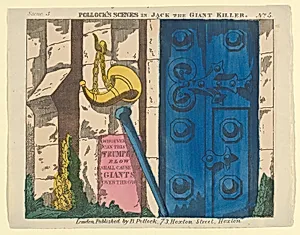
Scene 5, from Jack and the Giant Killer, Scenes for a Toy Theater
1870–90
Medium
Lithograph
Dimensions
Sheet: 6 11/16 × 8 7/16 in. (17 × 21.4 cm)
Classification
Prints
Department
Drawings and Prints
Museum
Metropolitan Museum of Art, New York, NY
Credit
The Elisha Whittelsey Collection, The Elisha Whittelsey Fund, 1952
Accession Number
52.541.1(13)
Rights
Public Domain
Tags
Art Historical Context
Step into the whimsical world of Victorian toy theaters with *Scene 5, from and the Giant Killer, for a Toy Theater* Benjamin Pollock, created between 1870 and 1890. This lithographed print, measuring just 6 11/16 × 8 7/16 inches, was designed for children to cut out, assemble, and their own miniature productions of the classic fairy tale—a thrilling tale of bravery where young Jack outwits a fearsome giant. Pollock a renowned London publisher, specialized in these affordable, colorful sheets that brought theater magic into middle-class homes. Toy theaters flourished in 19th-century Britain as an educational pastime, fostering creativity, storytelling, and an appreciation for drama without the expense of live performances. Printed via lithography—a technique that allowed vibrant, detailed imagery in multiple colors—these scenes featured exaggerated architecture, dramatic props like doors and musical instruments (as seen here), and bold characters ready for action. Pollock's editions preserved and popularized traditional narratives, making high art accessible to young audiences. Today, housed in the Metropolitan Museum of Art's Drawings and Prints department (The Elisha Whittelsey Collection, 1952), this piece evokes nostalgia for a bygone era of hands-on play. Imagine the delight of kids manipulating paper puppets across this stage—proof that imagination needs no batteries!