
Shakuhachi (A Kind of Bamboo Flute) and Its Cover
19th century
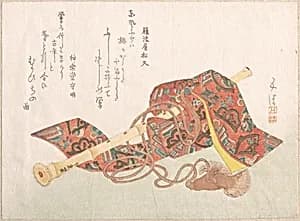
Medium
Woodblock print (surimono); ink and color on paper
Dimensions
5 5/16 x 7 5/16 in. (13.5 x 18.6 cm)
Classification
Prints
Culture
Japan
Department
Asian Art
Museum
Metropolitan Museum of Art, New York, NY
Credit
H. O. Havemeyer Collection, Bequest of Mrs. H. O. Havemeyer, 1929
Accession Number
JP2174
Rights
Public Domain
Tags
Art Historical Context
In the delicate world of 19th-century Japanese art, Sunayama Gose *Shakuhachi (A Kind of Bamboo Flute and Its Cover* stands as a charming example of *surimono*, a woodblock print commissioned for intimate occasions like New Year's greetings or poetry gatherings. Unlike mass-produced *ukiyo-e* prints, *surimono* were luxurious, small-format works—here, just 5 5/16 x 7 5/16 inches—featuring vibrant inks, metallic pigments, and embossing for a tactile elegance. Crafted with ink and color on paper, this piece captures the serene beauty of the shakuhachi, a five-holed bamboo flute revered in Japanese culture. The shakuhachi held deep cultural significance, often played by wandering Zen monks known as *komusō*, who used its haunting, breathy tones for meditation and spiritual discipline. Gosei, a specialist in such refined prints, highlights the flute and its protective cover with meticulous detail, evoking everyday artistry amid Japan's Edo period (1603–1868), when woodblock printing flourished. This intimate depiction invites viewers to appreciate the fusion of utility and aesthetics in traditional Japanese life. Now part of the Metropolitan Museum of Art's H. O. Havemeyer Collection (bequest of Mrs. H. O. Havemeyer, 1929), the print exemplifies the Asian Art Department's treasures, bridging personal devotion with masterful technique.