
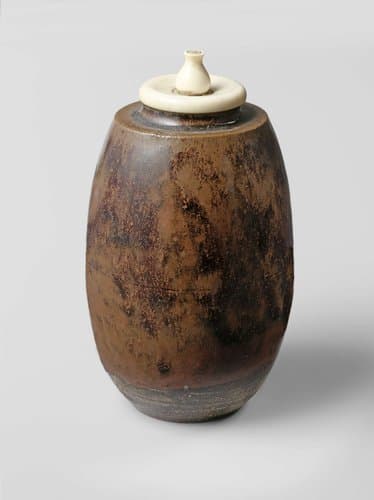
Tea caddy with a brown glaze
c. 1600 - c. 1800
Medium
stoneware
Dimensions
3.1; 2; 3.4; 8.4; 2.9; 9.7; 6
Rights
Public Domain
About this artwork
label, binnenzijde: ‘ko seto’
Art Historical Context
This modest stoneware tea caddy, measuring just 9.7 centimeters in height, was made anonymously between 1600 and 1800. Its rich brown glaze and compact form are characteristic of Ko-Seto ware, as noted by the label inside the vessel. Produced in Japan’s ancient Seto kiln region, the piece reflects centuries of ceramic tradition that valued natural materials and subtle surface effects over ornate decoration. During the Edo period, tea caddies played an essential role in the Japanese tea ceremony, where they stored precious powdered matcha. Ko-Seto examples like this one embody the wabi-sabi aesthetic, celebrating the quiet beauty of earthy tones and hand-formed shapes. Anonymous potters transformed humble stoneware into objects of contemplation, their work prized for both practical function and understated elegance. Today, the caddy offers visitors a glimpse into the cultural importance of tea utensils, where even small vessels carried deep significance in daily rituals and social gatherings. Its surviving label reminds us of the long-standing appreciation for early Seto ceramics across generations.