
Textile Fragment
Unknown Artist
17th–18th century
Medium
Silk, metal thread
Dimensions
H. 5 5/8 in. (14.3 cm) W. 6 in. (15.2 cm)
Classification
Textiles
Department
Islamic Art
Museum
Metropolitan Museum of Art, New York, NY
Credit
Gift of Nanette B. Kelekian, in honor of Olga Raggio, 2002
Accession Number
2002.494.728
Rights
Public Domain
Art Historical Context
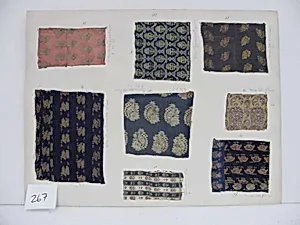
This exquisite textile fragment, dating to the 17th–18th, hails from the Islamic world and showcases the opulence of luxury fabrics produced during that era. Crafted from shimmering silk woven with intricate metal threads—likely gold or silver lamé—it measures a modest 5⅝ × 6 inches, suggesting it is a surviving piece from a larger garment, sash, or ceremonial textile. Now housed in the Metropolitan Museum of Art's Department Islamic Art, it was generously gifted by Nanette B. Kian in honor of Olga Raggio in 2002. In the vibrant courts of the Ottoman Empire, Safavid Persia, or Mughal India, such textiles represented the pinnacle of artisanal skill and cultural prestige. Silk, prized along the Silk Road trade routes, was often embellished with metal threads to evoke wealth and divine splendor, adorning elite clothing, turbans, or mosque furnishings. The use of metal-wrapped threads, a sophisticated technique requiring precise weaving or couching, created luminous patterns that caught the light, symbolizing status and spiritual radiance in Islamic aesthetics. Though the full design is fragmented, this piece invites us to imagine the bustling workshops where master weavers blended technical virtuosity with poetic motifs—floral arabesques, geometric stars, or symbolic creatures—enduring testaments to a golden age of Islamic textile artistry.