
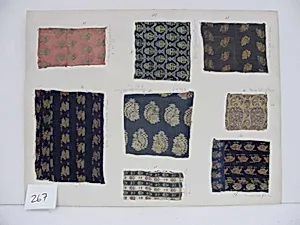
Textile Fragment
Unknown Artist
17th century
Medium
Silk, metal thread
Dimensions
H. 6 3/4 in. (17.1 cm) W. 5 1/8 in. (13 cm)
Classification
Textiles
Department
Islamic Art
Museum
Metropolitan Museum of Art, New York, NY
Credit
Gift of Nanette B. Kelekian, in honor of Olga Raggio, 2002
Accession Number
2002.494.729
Rights
Public Domain
Art Historical Context
This delicate *Textile Fragment* from the th century offers a glimpse into the exquisite craftsmanship of Islamic art. Crafted from silk woven with shimmering metal threads—likely gold or silver—it exemplifies the luxurious textiles produced during a golden age of Islamic weaving in regions like the Ottoman Empire or Safavid Persia. At just 6 3/4 by 5 1/8 inches, this small survivor hints at a larger garment, curtain, or ceremonial object, where such materials signified wealth, status, and piety. The use of metal threads, achieved through sophisticated techniques like brocading or lampas weaving, created a rich, reflective surface that caught the light in palaces and mosques. These textiles were not mere decoration; they embodied cultural exchanges along the Silk Road, blending Persian motifs with technical innovations. Though the artist remains unknown, the fragment's preservation underscores the enduring allure of Islamic textile arts, celebrated for their intricate patterns and vibrant palettes. A generous gift to the Metropolitan Museum of Art in 2002, this piece invites visitors to appreciate how everyday luxuries wove together history, trade, and artistry in the 17th century.