
Textile Fragment
Unknown Artist
17th–18th century
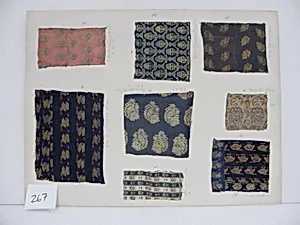
Medium
Silk
Dimensions
H. 7 in. (17.8 cm) W. 9 in. (22.9 cm)
Classification
Textiles
Department
Islamic Art
Museum
Metropolitan Museum of Art, New York, NY
Credit
Gift of Nanette B. Kelekian, in honor of Olga Raggio, 2002
Accession Number
2002.494.730
Rights
Public Domain
Art Historical Context
This exquisite silk *Textile Fragment* from the 17th–18th century offers a glimpse into the opulent world of Islamic art. Measuring just 7 by 9 inches (17.8 by 22.9 cm), it survives as a precious remnant, likely from a larger garment, curtain, or furnishing. Housed in the Metropolitan Museum of Art's Department of Islamic Art, it entered the collection in 2002 as a gift from Nanette B. Kelekian in honor of curator Olga Raggio, underscoring its enduring appeal to connoisseurs. Silk, a luxurious medium in the Islamic world, was prized for its sheen, durability, and ability to hold intricate patterns—often produced in renowned weaving centers like those in the Ottoman Empire, Safavid Iran, or Mughal India. During this period, textiles served not only practical purposes but also as symbols of status and piety, traded along vibrant Silk Road routes and adorned with motifs reflecting floral abundance, geometric precision, or calligraphic elegance. Though the artist remains unknown, this fragment exemplifies the anonymous mastery of Islamic textile artisans, whose techniques blended functionality with artistry. It invites us to imagine the hands that wove it, evoking the sensory richness of a bygone era where fabric was both canvas and cultural treasure.