
Trade Card
19th century
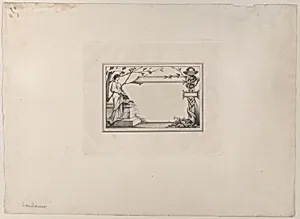
Medium
Engraving
Dimensions
Sheet: 8 11/16 × 11 7/8 in. (22 × 30.2 cm) Plate: 4 5/8 × 5 13/16 in. (11.7 × 14.7 cm)
Classification
Prints|Ephemera
Department
Drawings and Prints
Museum
Metropolitan Museum of Art, New York, NY
Credit
Gift of Bella C. Landauer, 1926
Accession Number
26.28.312
Rights
Public Domain
Art Historical Context
This charming 19th-century British trade card exemplifies the vibrant world of Victorian advertising ephemera. Produced anonymously during an era of rapid industrialization and burgeoning consumer culture, trade cards were small, collectible promotional items distributed by to advertise goods like soaps, foods, and patent medicines. Often exchanged with purchases or mailed to households, they transformed everyday commerce into pocket-sized art, blending marketing savvy with visual appeal and fueling a popular collecting craze among Victorians. Crafted as an engraving—a meticulous intaglio printing technique where artists incise designs into metal plates for inked impressions—this piece highlights the precision and reproducibility prized in 19th-century printmaking. The modest plate size (4 5/8 × 5 13/16 in.) allowed for mass production on larger sheets (8 11/16 × 11 7/8 in.), making it affordable yet finely detailed. As ephemera, it was never intended for permanence, yet its survival speaks to the era's graphic ingenuity. Today, housed in the Metropolitan Museum of Art's Drawings and Prints department through the generous 1926 gift of collector Bella C. Landauer, this trade card offers a window into Britain's commercial past, reminding us how everyday objects captured the spirit of innovation and aspiration.
About the Artist
Anonymous, British, 19th century · 1800–1900
**Anonymous, British, 19th century** is not the name of a single individual but a standard museum attribution used for works whose creators remain unidentified yet are clearly British and date to the 1800s. Major institutions, including the Metropolitan Museum of Art, employ this designation for hundreds of drawings, prints, designs, and decorative studies that lack signatures or firm documentary ...