
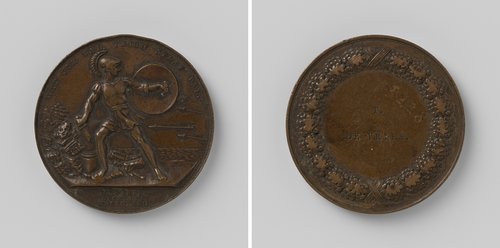
Verdediging van de citadel van Antwerpen
1832 - 1833
Medium
striking (metalworking)
Dimensions
76.64; 5.2
Rights
Public Domain
About this artwork
Schenking van H. Takken, Amsterdam
Art Historical Context
**Verdediging van de citadel van Antwerpen** (Defense of the Citadel of Antwerp), crafted by Dutch medalist David van der Kellen (1804–1879) 1832 and 1833, is a striking example of commemorative metalwork. This small yet weighty medal—measuring 5.2 cm in diameter and weighing .64 grams—was produced using the striking technique, where a detailed die is hammered into softened metal to create a raised relief design. Van derellen, renowned for his precise engravings and medals captured a pivotal moment in European history on this intimate scale. The artwork commemorates the dramatic Dutch defense of Antwerp's citadel during the Belgian Revolution of 1830–1832. In late 1832, Dutch forces under Prince Frederick held the fortress against Belgian revolutionaries and French interventionists, symbolizing national resilience amid the push for Belgian independence. Such medals were popular in the 19th century as portable tokens of patriotism, blending artistry with propaganda. Generously donated by H. Takken of Amsterdam, this piece highlights the enduring cultural ties between the Netherlands and Belgium. Van der Kellen's mastery of fine detail invites close inspection, offering visitors a tangible link to the tensions that reshaped borders and identities in the early 19th century.