
Verdediging van de citadel van Antwerpen
1832 - 1833
Medium
striking (metalworking)
Dimensions
77.83; 5.2
Rights
Public Domain
About this artwork
diameter 5,2 cm x gewicht 77,83 gr
Art Historical Context
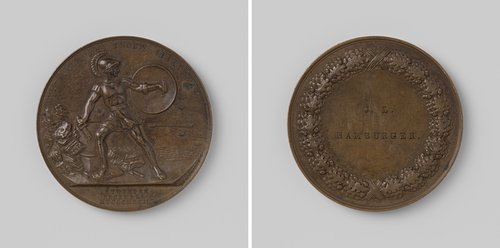
**Verdediging van deadel van Antwerpen** (Defense of the Citadel of Antwerp), crafted by Dutch artist David van der Kellen between 1832 and 1833, is a finely struck medal that captures a pivotal moment in European history. Van der Kellen, a engraver and medalist1804–1879), specialized in historical commemoratives, blending intricate detail with patriotic themes during a time of national upheaval. Measuring just 5.2 cm in diameter and weighing 77.83, this compact bronze-like piece was likely produced as a wearable or collectible token, allowing individuals to carry a symbol of resilience. The medal depicts the fierce defense of Antwerp's citadel by Dutch forces amid the Belgian Revolution of 1830–1832. In late 1832, as Belgian revolutionaries besieged the stronghold—held by Dutch troops loyal to King William I—the citadel became a flashpoint in the struggle for Belgian independence. Van der Kellen's design immortalizes this dramatic standoff, reflecting Dutch perspectives on loyalty and resistance during the conflict that reshaped the Low Countries. Struck through metalworking—a technique involving a die pressed into softened metal under high pressure—this medal exemplifies 19th-century numismatic artistry. Its small scale demanded masterful engraving for sharp relief and texture, making it both a historical artifact and a testament to technical precision. Visitors, imagine pinning this to your lapel as a badge of solidarity in turbulent times!