
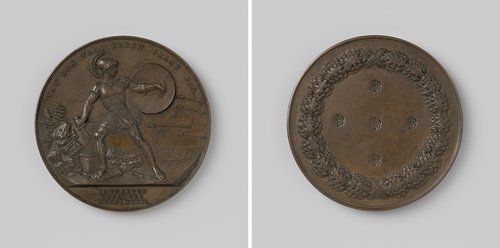
Verdediging van de citadel van Antwerpen, penning uitgereikt aan de verdedigers van de citadel en aan de manschappen op de vloot op de Schelde door de Commissie van erkentenis te Amsterdam
1832 - 1833
Medium
striking (metalworking)
Dimensions
80.42; 5.2
Rights
Public Domain
About this artwork
Gift of J.M. van Gelder-Nijhoff
Art Historical Context
Behold the *Verdediging van deadel van Antwerpen*, a struck medal crafted by Dutch engraver David van derellen (1804–9) between 1832 and 1833. just 5.2 cm in diameter and weighing 80.42 grams, this commemorative piece honors the brave defenders of Antwerp's citadel and the crews of the Scheldt River fleet. Issued by Amsterdam's Commissie van Erkenntnis (Recognition Committee), it celebrates Dutch resilience during the Belgian Revolution, particularly the dramatic Siege of Antwerp in late 1832, when loyalist forces held out against revolutionary besiegers amid the push for Belgian independence from the United Kingdom of the Netherlands. Van der Kellen, a master of 19th-century Dutch medal art, employed the striking technique—hammering softened metal blanks against engraved dies under immense pressure—to achieve crisp, high-relief details. This method, perfected in the Renaissance and revived in the Napoleonic era, allowed for mass production of durable, intricate honors, blending sculpture's tactility with coin-like precision. Such medals were not mere trinkets but powerful symbols of national pride, worn or displayed to evoke shared sacrifice. Generously donated by J.M. van Gelder-Nijhoff, this artifact transports us to a pivotal moment of European upheaval, reminding visitors of how art immortalizes valor on a heroic scale—small in size, monumental in meaning.